Disclosure: This article reflects my personal experience with a privately owned BYD Atto 3 purchased in November 2025. All costs are real and documented. Your experience may vary depending on your electricity tariff, driving patterns, and local service centre quality.
The Milestone
The odometer clicked past 10,000 km on a wet Tuesday morning in April. No warning lights. No drama. Just a quiet chime and a number that felt significant for reasons I couldn't quite explain.
Ten thousand kilometres isn't a lifetime, but it's enough. Enough for the novelty to wear off. Enough for the quirks to become either endearing or infuriating. Enough to know whether you made a £37,000 mistake or a £37,000 investment.
Here's everything I know after 10,000 km in a Chinese electric car. The costs down to the penny. The surprises — good and bad. And what happened when I took it in for its first service.
The Costs: Every Penny Documented
People ask about range and 0–60 times. They should ask about this. Here's exactly what 10,000 km cost.
Category | Cost | Notes |
|---|---|---|
Home charging | £209.40 | 8,700 km on off-peak tariff at 7.5p/kWh |
Public charging | £87.50 | 1,300 km on motorway trips, various networks |
Insurance | £520.00 | Annual premium, 36-year-old driver, clean record, UK |
Servicing | £0.00 | First service at 20,000 km, not yet due |
Tyres | £0.00 | Original tyres, 5 mm tread remaining all round |
Brake pads | £0.00 | Regenerative braking means almost no pad wear |
Road tax | £0.00 | Zero VED for EVs registered before April 2025 |
Total | £816.90 |
That's 8.2 pence per kilometre, all in. My previous petrol car — a perfectly sensible VW Golf — cost about 21 pence per kilometre over the same distance when you factor in fuel, higher servicing costs, and road tax. The EV has saved me roughly £1,280 in 10,000 km.
The savings aren't theoretical. They're measurable. And they're delivered every single month when the direct debits come out of my account.
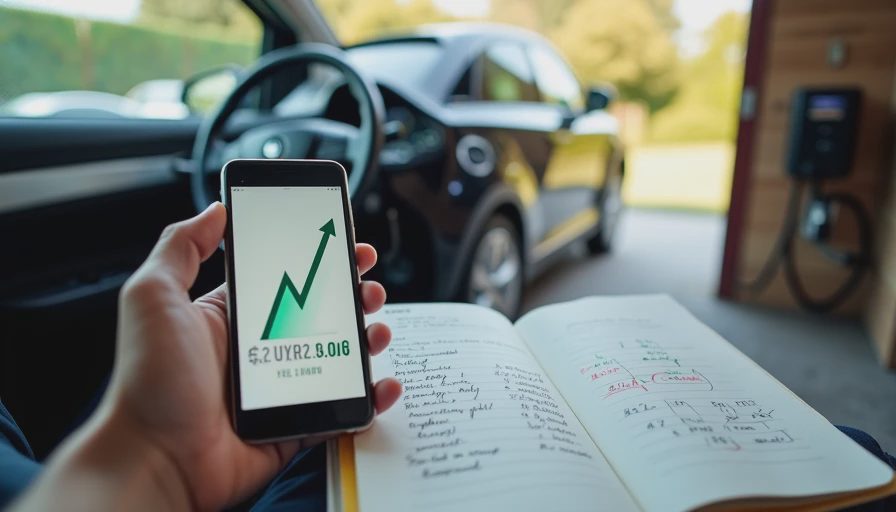
The public charging note: All of that £87.50 was spent on three long-distance trips. On a day-to-day basis, I never use public chargers. If you can't charge at home, your costs will look very different. The economics of an EV depend more on your charging situation than on which car you buy.
The Surprises: Things I Didn't Expect
Good Surprise: The Range Estimator Tells the Truth
After about 3,000 km, something clicked. The car had learned my driving patterns, and the displayed range became genuinely accurate. If it says 280 km remaining, I trust it to deliver 270–290 km. That trust transforms the ownership experience. My previous EV — a VW ID.3 — would occasionally over-promise by 10–15%, which made journey planning a constant mental arithmetic exercise. The BYD doesn't play games with its numbers.
Good Surprise: The Heated Seats Are Exceptional
This sounds trivial. It's not. The Atto 3's heated seats warm up faster and get hotter than any car I've owned, including premium-brand vehicles costing twice as much. On a freezing January morning, the seats are at full temperature within 90 seconds. It's a small thing, but small things accumulate over 10,000 km.
Bad Surprise: The Lane-Keeping Assist Still Annoys Me
I thought I'd get used to it. I haven't. The system defaults to ON every single time you start the car, and on narrow UK B-roads it tugs at the steering wheel at precisely the wrong moments. I've developed a muscle-memory routine: start car, seatbelt, disable lane-keeping assist. It takes three seconds. It still irritates me every time.
Bad Surprise: The Windscreen Wipers Are Below Average
The automatic wipers are inconsistent — sometimes too eager, sometimes unresponsive to light rain. The manual settings offer too few options. At motorway speeds, the driver's side wiper leaves a small unwiped triangle at the top corner of the screen, directly in my line of sight. After 10,000 km, I've learned to look around it. I shouldn't have to.
Unexpected Surprise: People Want to Talk About It
I've been stopped in supermarket car parks. At charging stations. Once at a set of traffic lights by the driver in the next lane. "Is that a BYD? Any good? Would you buy another one?" The questions are always curious, never hostile. The brand awareness is growing fast — a year ago, nobody knew what a BYD was. Now, every other person seems to have heard the name. The conversation is shifting from "what is it?" to "should I get one?" That's remarkable.
The Service Experience: What Happened When I Needed Help
The Atto 3's first scheduled service is at 20,000 km, so I haven't had a routine service visit yet. But I did have one issue that required a dealer visit.
At around 6,500 km, the wireless phone charger stopped working intermittently. It would charge for a few minutes, then disconnect, then reconnect. Annoying rather than critical.
I booked an appointment through BYD's UK customer service line. The earliest available slot was 12 days out at my nearest service centre in Manchester. That's fine — comparable to any mainstream brand. The centre was clean, modern, and clearly branded as a BYD facility rather than a shared space with another franchise.
The technician diagnosed a loose connection in the charging pad within an hour. It was fixed under warranty with no charge and no paperwork drama. I was offered a coffee, given a comfortable waiting area with WiFi, and sent on my way. The whole experience took 90 minutes.
What this tells me: The service infrastructure is real. It's not theoretical. The dealer groups BYD has partnered with — Arnold Clark, Lookers, and others — know how to run service centres. The technician had clearly been trained on the vehicle. The parts supply chain worked, because the replacement connector was in stock.
One data point doesn't prove anything. But it's a reassuring data point.
The Charging Routine: How It Actually Works Day to Day
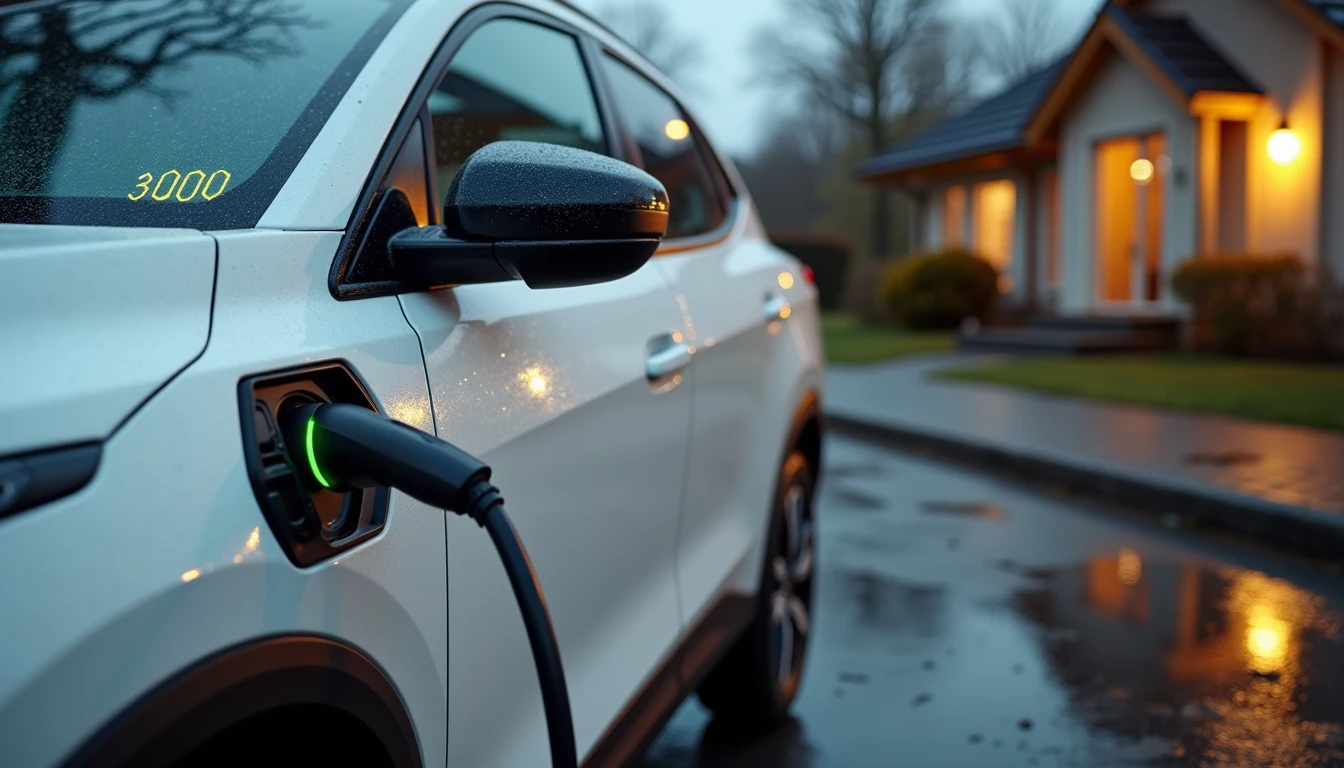
I charge at home on an off-peak tariff. The car is programmed to start charging at midnight and finish by 6 am. I plug in when I get home — the cable lives on a hook on the garage wall — and unplug in the morning. It takes 15 seconds at each end.
On a typical day, I drive 40–60 km. The battery rarely drops below 60%. I charge to 100% without hesitation because LFP chemistry doesn't mind being full.
The phrase "range anxiety" stopped meaning anything to me around month two. The car always has enough range for what I need it to do. On the rare days I drive further — a 300 km round trip to visit family, a 400 km day for work — I plan a single charging stop. The car's navigation suggests a charger. I stop for 25–30 minutes. I check emails. I carry on.
It's not as seamless as a petrol car for long journeys. But it's also not a hardship. And for the other 360 days of the year, it's more convenient — no petrol station visits, no standing in the cold holding a fuel nozzle. Just plug in at home and forget about it.
What I'd Tell Someone Considering a Chinese EV
The car itself is good. Not "good for a Chinese car." Just good. The Atto 3 is comfortable, efficient, well-built, and cheap to run. It's not perfect — the software has rough edges, the lane-keeping assist is annoying, the wipers are mediocre — but the fundamentals are solid.
The brand is real. BYD isn't a start-up that might disappear. It's the world's largest EV manufacturer. The service centres exist. The warranty is honoured. The parts are available. The concerns people had three years ago about Chinese car support are increasingly outdated.
The savings are genuine. I'm saving over £100 a month compared to running a petrol car. That's real money. Over a typical three-year ownership period, that's nearly £4,000 in my pocket rather than Shell's.
The social experiment has been surprisingly positive. I expected more scepticism. What I got was curiosity. People are genuinely interested in Chinese EVs. They've read the headlines. They want to know if the cars are any good. When I tell them yes, they listen.
Would I Do It Again?
Yes.
I'd buy another Chinese EV. Maybe the same one — the Atto 3 still fits my life perfectly. Maybe the Seal, now that I've driven one and know how good it is. Maybe something from XPeng or NIO when they're more established in the UK.
The car has done what I asked of it. It's been reliable. It's been cheap. It's been comfortable. It's started every morning and gotten me where I needed to go. After 10,000 km, that's what matters.
The Chinese EV revolution isn't coming. It's parked on my driveway. And it's staying there.