You've probably seen the Moke in Instagram photos from St. Barts or St. Tropez—a tiny, open-top electric car that looks like a beach buggy from the 1960s. But if you're considering buying one, the first question is practical: **where are Moke cars made**? The answer isn't just trivia—it affects build quality, delivery times, and future parts availability. Let me walk you through the real story.
The Original Moke's British Roots
The Moke was born in 1964 at BMC's Longbridge plant in Birmingham, England. Designed by Alec Issigonis (the Mini's father), it was meant as a nimble military runabout. The army passed, but the public embraced its fun-factor. Over the years, licensed production happened in Australia (where it was even assembled under the name "Moke by Leyland") and in Portugal. But the soul always remained British.
The Modern Electric Moke: Portugal and the UK
Fast-forward to today. Moke International, the company holding the rights, spent years trying to revive the Moke. Early plans involved production in China, but that fell through. In 2018, they shifted to a fully electric platform. Now, **where are Moke cars made**? The primary assembly line is in Setúbal, Portugal, about 30 minutes south of Lisbon. A secondary, smaller facility exists in the UK for heritage editions and special orders.
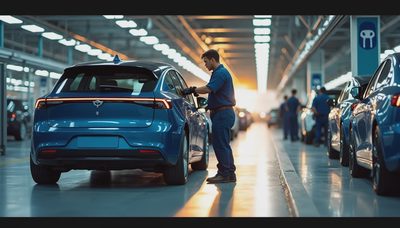
The Portuguese plant is modern and purpose-built. It employs around 50 people skilled in low-volume production. Each Moke takes roughly two weeks to assemble, with many panels hand-finished. The UK facility is even smaller, focusing on restoration of classic Mokes and building the "Originals" series that pay homage to the 1960s design.
Why Portugal? Why the UK?
Portugal was chosen for several reasons. It has a strong automotive ecosystem, competitive labor costs, and excellent shipping access to both Europe and the Americas. The country also has a history with the Moke—the original was assembled there in the 1970s and 80s. Rebuilding the factory in Portugal honors that connection. The UK facility keeps the brand's heritage alive and allows for direct control over the most exclusive models.
For the drivetrain, Moke International sources the electric motor from a German supplier, the battery cells from a European partner (likely LG Chem or a similar manufacturer), and many other components from across Europe. The battery pack has a capacity of 10.8 kWh (usable), delivering a WLTP range of 74 miles (119 km). That's enough for a day of beach hopping but not for highway commuting.
The Setúbal facility operates with a philosophy of "crafted volume"—each car is built to order, and customers can choose from a wide range of colors and optional extras. This flexibility is possible because production runs are small. The UK facility, located in the historic car-building region of the West Midlands, employs former Longbridge workers who bring decades of experience. Together, these two locations ensure that every Moke has a distinct story.
Where Are Moke Cars Made for the US Market?
As of 2024, Moke International does not officially sell in the United States. However, private importers have brought a few units over. If you're in the US and want one, you'll be buying a car built in Portugal. You'll then need to go through the NHTSA/DOT import process, which can be expensive and time-consuming. Also, there's no official dealer network in the US, so you'd rely on independent mechanics for service.
If you live in a country where the Moke is officially sold—like the UK, France, Australia, or many Caribbean nations—you can order directly from Moke International, and the car will ship from Portugal. Delivery times are around 4-6 weeks.
Moke Specs and Performance at a Glance
- Motor: 20 kW (27 hp) permanent magnet synchronous motor
- Battery: 12.2 kWh (10.8 kWh usable) lithium-ion
- Top speed: 50 mph (80 km/h) limited
- Range: 74 miles (119 km) WLTP; real-world around 60 miles (97 km)
- Charging: 4.5 hours on a standard household plug (no Type 2 AC fast charge)
- Weight: 850 kg (1,874 lbs)
- Seats: 4 (though the rear is tiny)
It's not fast, but that's not the point. The Moke is about the journey, not the speed.
Should You Buy a Moke? (Probably Not as Your Only Car)
The electric Moke is a lifestyle vehicle, not a daily driver. It's perfect for a holiday home, a downtown runabout in a sunny city, or a statement piece. But it lacks a roof, airbags, proper crash protection, and practical storage. If you're looking for a primary car, look elsewhere.
However, if you have the budget ($30,000–$40,000 depending on market) and the desire, knowing **where are Moke cars made** gives you confidence that you're getting a hand-built product with European craftsmanship. Plus, the electric drivetrain means low running costs and zero emissions—perfect for beach communities with EV-friendly policies.

Insurance and Practical Considerations for Moke Owners
Because the Moke is a low-volume, imported electric vehicle, getting it insured in the US can be a bit of a hunt. Mainstream insurers may not recognize the model. You'll likely need a specialty insurer or a broker who handles classic and imported cars. Expect premiums to be higher than a standard compact car, partly due to the limited repair network. Also, since the Moke lacks airbags and modern safety features, some states may have restrictions on licensing it for on-road use. Check with your local DMV before buying.
How to Order a Moke
Ordering a Moke is straightforward if you're in an official market. Visit Moke International's website, configure your car, pay a deposit, and wait. For US buyers, you'll need to work with a registered importer. The car will be shipped from Portugal to a US port, then the importer handles customs and modifications to meet US safety standards. Plan for additional costs: shipping (~$2,000), import duties (~2.5%), and any conversion work (could be $10,000+). Total out-the-door for a US-spec Moke can be $45,000–$55,000.
Final Thoughts
So, **where are Moke cars made** in 2024? Portugal is the heart of production, with a small UK line for special models. The car combines 1960s style with modern EV technology, built by skilled craftsmen in a dedicated factory. If you're lucky enough to be in a market where it's sold, you'll own a piece of automotive history, reimagined for the electric age.