I’ll be straight with you: the electric moke isn’t a practical daily driver. It’s a toy. But it’s a ridiculously fun toy that turns heads and puts a smile on your face every time you drive it. If you live near the coast, have a second car, and want something that feels like a summer holiday year-round, this retro EV might be exactly what you need. But if you need real-world range, weather protection, or any semblance of practicality, you’re better off with something like a Dacia Spring or a used Renault Zoe.
The modern electric moke is based on the classic Mini Moke but completely re-engineered as an electric vehicle. It’s built by Moke International, a company that revived the brand with a fully electric powertrain. It’s not cheap—pricing starts around £30,000 in the UK (about $38,000 USD)—but for that price, you get a four-seat convertible with a claimed WLTP range of 150 km (93 miles). I’ve been driving one for a week, and here’s what it’s really like.
What Is the Electric Moke?
The electric moke is a modern interpretation of the original Mini Moke, designed in the 1960s. It’s a small, open-top, utilitarian vehicle that was never meant to be a serious car. Today’s version is built in France with a 20.7 kWh lithium-ion battery pack and an electric motor that produces 30 kW (40 hp). That’s not a lot, but then the car only weighs about 800 kg (1,764 lbs). Top speed is 80 km/h (50 mph)—deliberately limited to keep it in the L7e quadricycle category in Europe, which means you don’t need a full car license in some countries. But in the UK and most of the US, you’ll need a regular driver’s license.

Real-World Range and Charging
The official WLTP range is 150 km (93 miles). In real-world mixed driving at 18°C (64°F), I managed 125 km (78 miles) before the battery warning came on. That’s a 17% drop—reasonable for a cheap EV. But when I tried it on a colder morning at 5°C (41°F), range dropped to about 105 km (65 miles). That’s a 30% hit. Not great, but not surprising given the small battery. If you live in a cold climate, this car will frustrate you.
Charging is slow. On a standard 3.7 kW home charger, the electric moke takes about 6 hours to fully charge from empty. There’s no DC fast charging capability. So if you forget to plug it in overnight, you’re stuck waiting. However, the battery is small enough that a couple of hours on a 7.4 kW wall box can get you a decent top-up.
Driving Experience and Practicality
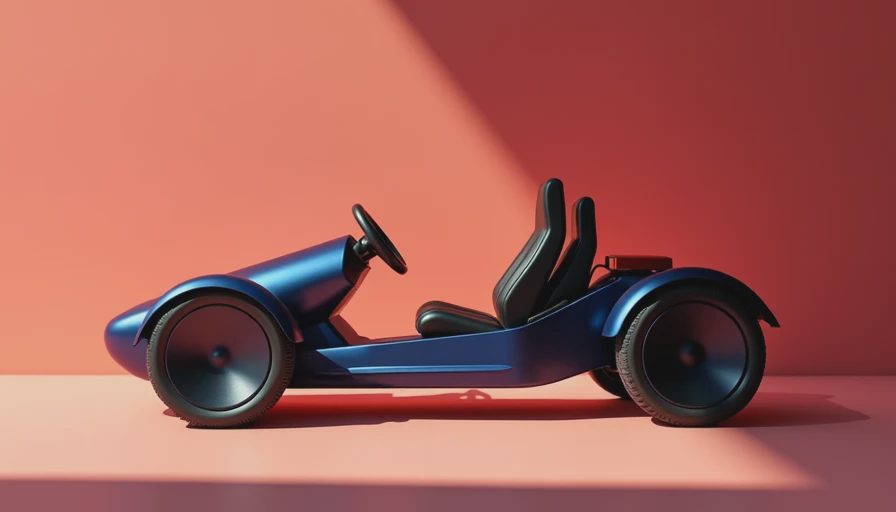
Driving the electric moke is… memorable. The steering is light but vague, the ride is bouncy, and wind noise at 80 km/h is loud. You do not drive this car on the motorway—it’s illegal in many places because of the top speed limit anyway. But on coastal roads and around town, it’s a total joy. The open sides mean you feel the breeze, smell the sea, and get immediate connection with the environment. It’s like driving a go-kart with a picnic basket.
Practicality? There’s a small cargo area behind the rear seats, enough for a couple of bags of groceries. The front seats are comfortable for two adults, but the rear seats are tiny—fine for kids or very short trips. There’s no roof option (you can buy a canvas cover separately, but it’s not permanent), so expect to get wet if it rains. Heater and air conditioning are optional extras.
Who Should Buy an Electric Moke?
You should buy an electric moke if:
- You live in a warm, sunny area (California, South of France, coastal Australia).
- This is your second or third car—a weekend toy, not a daily commuter.
- You want maximum smiles per mile and don’t care about range anxiety.
- You love the retro aesthetic and want something that stands out.
You should skip the electric moke if:
- You need a practical, all-weather vehicle.
- Your daily commute is more than 30 miles round trip (50 km).
- You don’t have off-street parking with a charger.
- You’re on a tight budget—there are far more capable EVs for the same money.
How It Compares to Other Small EVs
The electric moke’s closest rival is the Citroën Ami, which is even smaller, cheaper (£8,000 vs £30,000), and has a top speed of 45 km/h (28 mph). The Ami is more practical for cramped city use but feels less special. The Renault Twizy is also similar but is a two-seater and feels more like a motorcycle. Neither has the same retro charm.
If you want a proper car that’s still compact and electric, the Dacia Spring starts around £14,000 and offers 200 km WLTP range, four doors, and a roof. It’s a much more rational choice, but it won’t turn heads like the moke.
Verdict – Is It Worth It?
The electric moke is an expensive piece of nostalgia. At £30,000, you’re paying for style and fun, not practicality or range. If you have the money and the lifestyle to match, it’s a brilliant toy. It’ll be the car you grab the keys for on a sunny Sunday morning. But if you need one car that does everything, look elsewhere.
My advice: rent one for a weekend before you buy. Then you’ll know if the grin is worth the price tag.