I've always had a soft spot for the **mini moke car**. It's one of those vehicles that puts a smile on your face before you even turn the key. With its minimalist design, open sides, and go-anywhere attitude, the Moke is the automotive equivalent of a summer holiday. But what's it like to own one today, and is the new electric version worth the hype? Let's dive in.
A Brief History of the Mini Moke
Conceived in the 1960s by Sir Alec Issigonis (the genius behind the original Mini), the Mini Moke was originally designed as a lightweight military vehicle. It never saw combat, but it found a cult following on sunny beaches and in holiday resorts. The production ran from 1964 to 1993, with versions built in the UK, Australia, and Portugal. The Moke's charm lies in its simplicity: a flat front, removable windscreen, and rear seats that fold flat. It's essentially a go-kart with a back seat.
What Makes the Mini Moke So Special?
There's nothing else quite like a **mini moke car**. It's tiny – just over 3 metres long – and weighs around 650 kg. The open sides give it a sense of freedom no modern car can match. You're exposed to the elements, the wind in your hair, and the smell of the road. It's not practical in the traditional sense – no roof, no doors, and laughable crash protection. But for a weekend toy, a beach cruiser, or a festival runabout, it's pure joy. The early models used the 848 cc or 998 cc Mini engine, producing about 34 horsepower. That's enough to get you to 110 km/h (68 mph) on a good day, but it's the experience, not the speed, that matters.

Driving the Classic Mini Moke: Fun or Frustration?
I drove a 1970s Australian-built Moke for a weekend, and I'll be honest: it's a mixed bag. On a sunny country road, with the wind whipping through the cabin, it's the most fun you can have at 60 km/h. The steering is direct, the ride is bumpy (leaf springs all round), and you feel every pebble. But that's part of the character. The noise from the engine and wind is relentless – don't expect to hold a conversation. Wet weather is miserable: you'll need waterproofs, because the canvas roof (if fitted) leaks, and there's no heater to speak of. But if you accept it for what it is – a fair-weather toy – it's utterly addictive.
The New Mini Moke: Petrol vs. Electric
In 2020, Moke International launched a 'new' Mini Moke, built in the UK using modernised running gear. It's more refined, with a 60 hp engine (still petrol) and optional electric power. The electric version uses a 20 kWh battery, giving a claimed range of about 113 km (70 miles). That's enough for a day at the beach or a coastal cruise. Prices start around £24,000 for the petrol, and £30,000+ for the electric. That's a lot for what is essentially a toy, but the exclusivity and nostalgia factor are high. The electric version is surprisingly good: instant torque makes it feel quicker than the numbers suggest, and the silence suits the open-air experience. No smelly exhaust, just the sound of tyres on tarmac. The new **mini moke car** retains the classic shape but adds disc brakes, better suspension, and a usable interior. It's still not a daily driver, but it's far more liveable than the original.
Who Should Buy a Mini Moke Car?
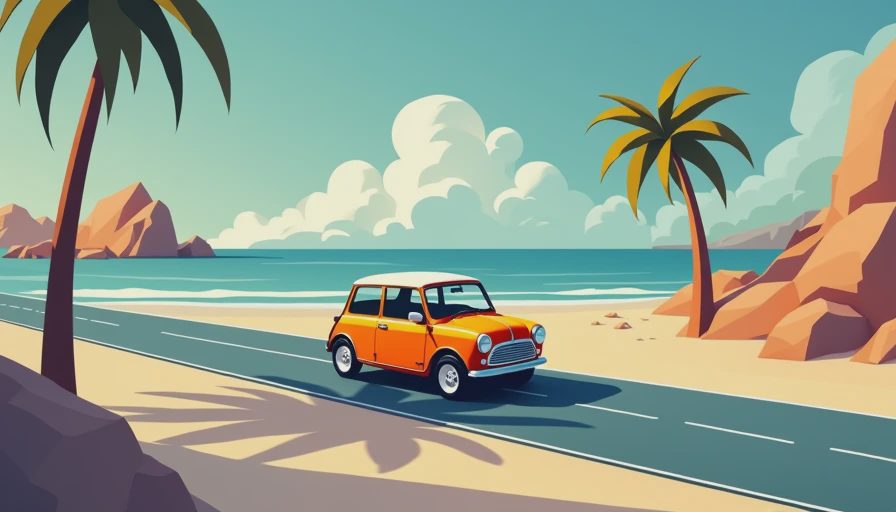
If you're looking for a practical family car, stop reading. The **mini moke car** is for the enthusiast with a sense of humour. It's a second or third car – something for sunny weekends, festivals, or coastal towns. It's also a great conversation starter. You can park it anywhere and people will smile. The electric version appeals to eco-conscious buyers who want zero-emission fun, though the range is limited. If you live near the coast or have a holiday home by the beach, a Moke is a perfect companion. Just make sure you have a garage for it – it's not secure, and the elements will ruin it.
Should You Consider a Conversion?
If you already own a classic Moke, you can convert it to electric. Companies like Electric Classic Cars offer conversion kits that cost around £10,000–£15,000. You'll get a 30–60 kWh battery and a motor that doubles the power. The result is a silent, reliable Moke with instant torque. I've driven a converted Moke, and it's a revelation. No more fiddling with carburettors or worrying about rust. The weight distribution improves, and the range is around 120–160 km (75–100 miles). It's not cheap, but it transforms the ownership experience. If you're handy, you could DIY with a kit from EV West. The classic **mini moke car** is a perfect candidate for electrification – light, simple, and loved.
Verdict: Is the Mini Moke Worth It?
The **mini moke car** is not for everyone. It's impractical, noisy, and expensive for what it is. But if you value fun over function, there's nothing else like it. The new electric version is the best way to experience the Moke today: you get the charm without the maintenance headaches. It's a toy, yes, but one that brings real joy. Test drive one if you can – just don't expect it to replace your daily driver.