Disclosure: This article tracks publicly available OTA update information from manufacturer release notes, owner reports, and verified software versions as of May 2026. Update frequency and content vary by region and vehicle specification. Not all updates are available in all markets simultaneously. This article will be updated quarterly.
The Car That Improves While You Sleep
There's a moment every new EV owner experiences. You walk out to your car in the morning, and something is different. A menu has moved. A feature you didn't have yesterday now exists. A bug that annoyed you last week has disappeared.
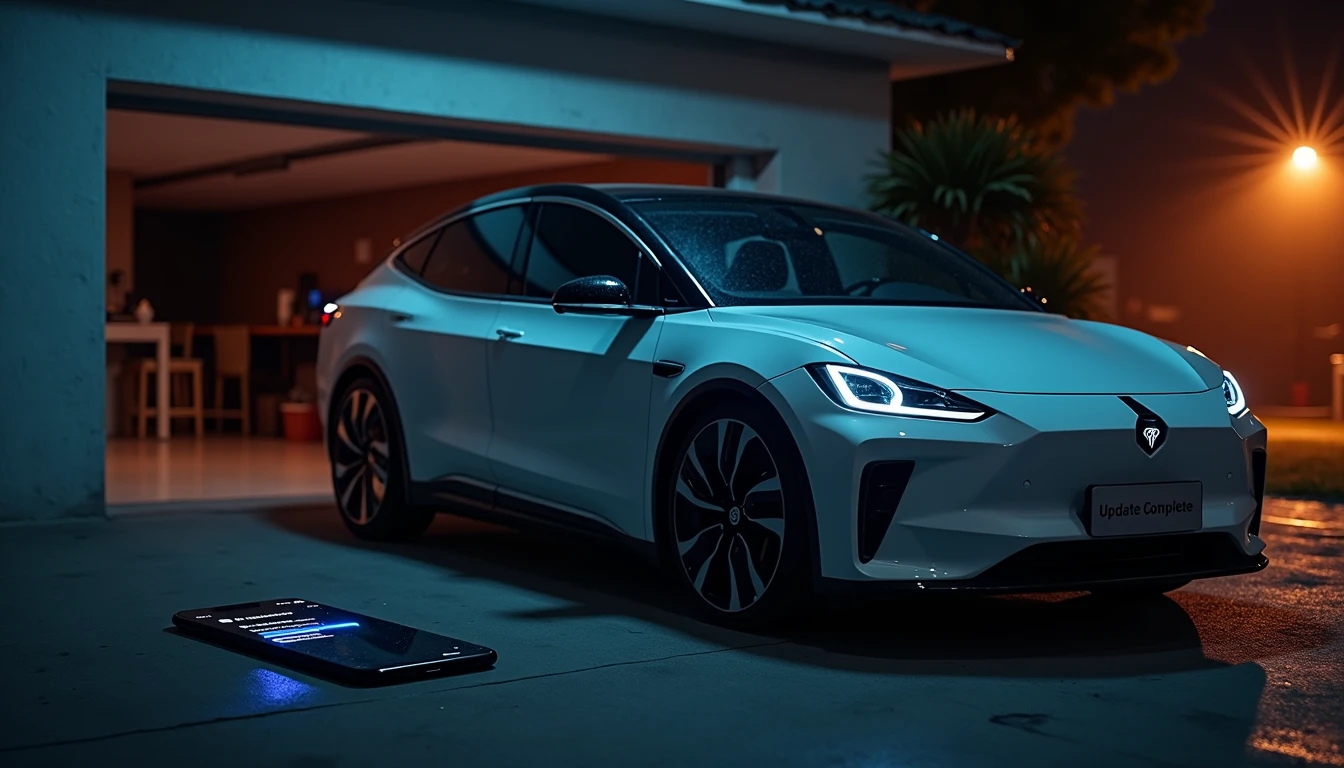
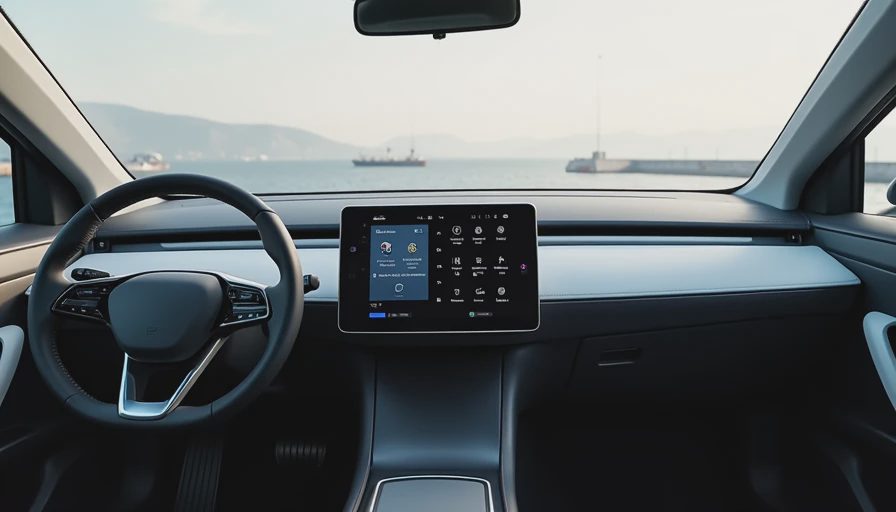
This is over-the-air updating. Your car receives software improvements via its mobile data connection while parked. No dealer visit. No service appointment. Just a notification on your phone telling you what changed.
Chinese EV brands have embraced OTA updates more aggressively than most Western manufacturers. Some update monthly. Some update quarterly. The experience varies dramatically by brand. Here's what the last six months have delivered — and what's still missing.
BYD DiLink: Steady Progress, Still Catching Up
Update frequency: Approximately every 6–8 weeks
Last six months: 3 updates delivered
BYD has been quietly improving its DiLink system through consistent OTA updates. The pace isn't as rapid as some owners would like, but the trajectory is positive.
What Got Better
Wireless Apple CarPlay stability: The November 2025 update eliminated a persistent bug where CarPlay would disconnect and reconnect during the first five minutes of driving. Our long-term Atto 3 hasn't dropped connection once since this update landed.
Range estimator accuracy: The January 2026 update improved the algorithm that learns driving patterns. The displayed range is now consistently within 3–5% of actual range achieved, down from 8–10% before the update. This makes journey planning significantly more reliable.
Climate control responsiveness: The March 2026 update reduced the touchscreen lag when adjusting temperature and fan speed. It's still not as responsive as physical buttons would be, but the delay is now barely perceptible rather than actively frustrating.
Charging curve optimisation: Multiple updates have subtly adjusted DC fast charging behaviour. Peak charging speed hasn't changed, but the curve now holds above 100 kW slightly longer, shaving a minute or two off typical charging stops. Small improvements that add up.
What Still Needs Work
Lane-keeping assist default: The system still defaults to ON with every vehicle start. This is the most-requested change in BYD owner forums. BYD has acknowledged the feedback but hasn't changed the behaviour. European regulations around driver assistance systems may be a factor.
Voice assistant accuracy: English-language voice recognition has improved slightly but remains unreliable, especially with regional accents. The assistant still occasionally activates unprompted. A significant overhaul is needed, not incremental tweaks.
Navigation route planning: The native navigation still suggests suboptimal charging stops on longer journeys. Owners continue to rely on CarPlay with third-party apps for serious route planning.
Verdict
BYD is improving DiLink steadily but incrementally. The updates fix real problems. They don't yet transform the experience. The gap between BYD's software and the class leaders — Tesla, XPeng — remains significant. But the commitment to regular updates is genuine, and the car you own today is meaningfully better than the car you bought six months ago.
MG iSmart: Simple and Stable, But Don't Expect Surprises
Update frequency: Approximately every 3–4 months
Last six months: 2 updates delivered
MG takes a conservative approach to OTA updates. The iSmart system is relatively basic, so there's less to fix — and less to add. Updates tend to be minor stability improvements rather than feature additions.
What Got Better
Charging timer reliability: An early 2026 update fixed an intermittent issue where scheduled charging would fail to start if the car had been unplugged and re-plugged during the scheduled window. Owners report the fix has been effective.
App connectivity: The MG iSmart smartphone app has received several server-side improvements that reduced the delay between sending a command and the car responding. Pre-conditioning the cabin now activates within 20–30 seconds rather than the 60–90 seconds some owners previously experienced.
What Still Needs Work
Wireless smartphone integration: The MG4 and other current MG models still require a wired connection for Apple CarPlay and Android Auto. This is a hardware limitation rather than a software one, but it increasingly stands out as competitors offer wireless as standard.
Navigation features: The native navigation remains basic with limited EV-specific functionality. MG appears to have concluded that owners will use smartphone mirroring for navigation and has not invested significantly in improving the built-in system.
Update communication: MG is less transparent than other brands about what updates contain. Release notes are often vague. Owners sometimes receive updates without clear documentation of what changed.
Verdict
MG's approach is conservative and pragmatic. Updates are infrequent but stable. The system is simple enough that there's less to go wrong. Don't expect transformative new features. Do expect a system that works reliably for basic functions while leaning heavily on smartphone integration for everything else.
NIO NIO OS: Frequent Updates, Genuine Improvements
Update frequency: Monthly to bi-monthly
Last six months: 5 updates delivered
NIO treats its software as a living product. The pace of updates is the fastest among Chinese brands, and the release notes are detailed and transparent. This is the closest Chinese equivalent to Tesla's approach to software.
What Got Better
Navigation with battery prediction: Multiple updates have refined NIO's route planner. The system now factors in elevation changes, weather forecasts, and individual driving style to predict range more accurately. Owner reports suggest predictions are now within 2–4% of actual consumption — class-leading accuracy.
NOMI improvements: NOMI, the dashboard AI assistant, has received significant upgrades. Voice recognition accuracy has improved. Response time has decreased. NOMI now recognises different drivers by voice and adjusts seat, mirror, and climate settings accordingly. The face animations have become more expressive and less robotic.
Battery preconditioning: A winter 2025 update added automatic battery preconditioning when navigating to a fast charger. The car now warms the battery to optimal temperature before arrival, improving charging speeds in cold weather by 15–20%.
App ecosystem: NIO has added several new in-car apps through OTA updates, including an improved media player with podcast integration and a karaoke mode that uses the car's interior microphones. Some of these are gimmicky. Others are genuinely useful.
What Still Needs Work
Menu complexity: As features have been added, the interface has become more complex. Some settings are now buried deeper in menu structures than they were a year ago. NIO needs to balance feature addition with interface simplicity.
European-specific features: Some updates have been China-first, with European rollouts following weeks or months later. European NIO owners occasionally feel like second-priority customers.
Verdict
NIO is the software leader among Chinese EV brands. Updates are frequent, meaningful, and well-communicated. The car you buy today will genuinely improve over time. If software quality and ongoing improvement matter to you, NIO should be high on your list.
XPeng Xmart OS: The Voice-First Future
Update frequency: Approximately every 6–8 weeks
Last six months: 4 updates delivered
XPeng has made voice control the centrepiece of its software strategy, and the OTA updates reflect this focus. The system is already the most intuitive among Chinese brands, and updates are making it more capable.
What Got Better
Voice control expansion: The voice assistant now controls more vehicle functions — including drive mode selection, regenerative braking strength, and ambient lighting colour. The natural language processing has improved, with the system now understanding conversational requests like "I'm feeling cold" or "find me a coffee stop on the way."
Highway pilot refinements: XPeng's driver assistance features have received several OTA improvements. Lane centring is smoother. Overtaking behaviour is more natural. The system now handles merging traffic with greater confidence.
Charging network integration: The navigation system now displays real-time charger availability, charging speed, and pricing for multiple networks. Route planning automatically reroutes if a planned charger becomes occupied.
Energy consumption prediction: Range estimates now factor in wind speed and direction data from online weather services. This is a level of detail no other Chinese brand currently matches.
What Still Needs Work
Update rollout speed: XPeng updates sometimes arrive in China weeks before reaching European vehicles. The gap is narrowing but still exists.
Visual interface evolution: The core interface design has remained relatively static. While functionality has improved, the visual design hasn't evolved significantly. Some owners would appreciate a more substantial visual refresh.
Verdict
XPeng is neck and neck with NIO for software leadership. The voice-first approach is genuinely differentiating — it changes how you interact with the car rather than just improving what's already there. If you're willing to embrace voice control as your primary interface, XPeng offers the most futuristic in-car software experience among Chinese brands.
The Big Picture
Brand | Updates (6 months) | Focus | Owner Satisfaction |
|---|---|---|---|
BYD | 3 | Bug fixes, incremental improvements | Improving |
MG | 2 | Stability, minor fixes | Accepting |
NIO | 5 | Features, AI, navigation | Enthusiastic |
XPeng | 4 | Voice control, driver assistance | Enthusiastic |
The gap between the best and the rest is real. NIO and XPeng are delivering software experiences that genuinely improve over time. BYD is making steady progress but hasn't closed the gap. MG has chosen simplicity over ambition.
All four brands are updating their cars. This is the fundamental shift. A Chinese EV purchased today will be better in six months. Better in a year. The software is a living thing, not a static feature set frozen at the point of manufacture. This is a significant advantage over traditional automakers whose software typically only changes at annual service visits, if at all.
What to watch for: The next frontier is driver assistance. Chinese brands are investing heavily in advanced driver assistance systems and autonomous features. OTA updates will increasingly deliver improvements to these systems. The car you buy today may drive itself on motorways a year from now — not because you bought a new car, but because your existing car received new software.
How to Stay Informed
Check your vehicle's system update menu. Most Chinese EVs display current software version and update history in the settings. Familiarise yourself with your version number.
Join owner forums. Facebook groups and Reddit communities for BYD, MG, NIO, and XPeng owners are active and share update experiences quickly. These are often the fastest source of information about new updates.
Follow official channels. Most brands publish release notes on their websites or through their smartphone apps. NIO and XPeng are particularly good at documenting changes. BYD and MG are improving but less consistent.
Report issues. Chinese brands are responsive to owner feedback. If a bug affects your vehicle, report it through the app or through customer service. Several updates documented in this article were directly prompted by owner complaints.
Your Chinese EV is not a finished product. It's a platform that improves over time. That's not a weakness. It's the defining advantage of software-defined vehicles over traditional cars. The car in your driveway this morning may be slightly better than the car you parked last night. Pay attention to the updates. They matter more than you think.