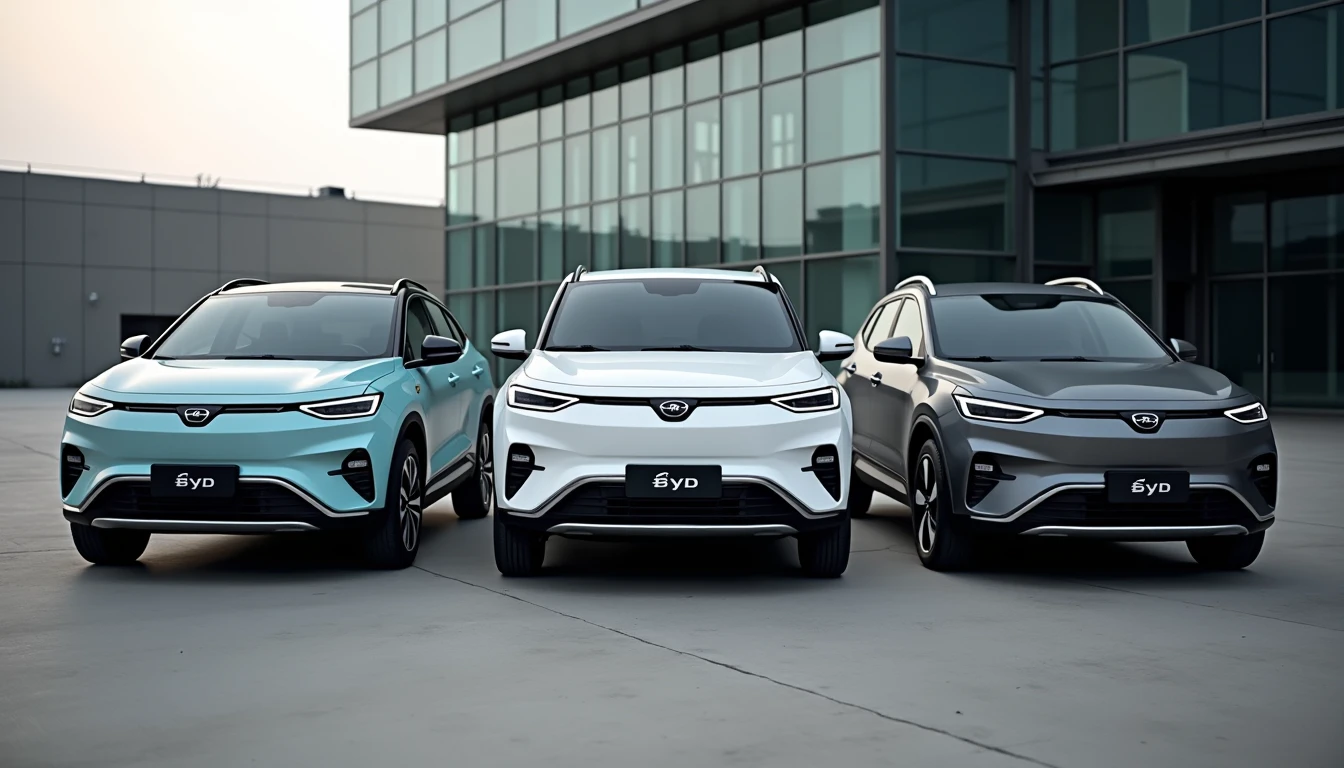
Disclosure: The author has personally driven all three vehicles — the Atto 3 as a long-term owner, the Dolphin and Seal as extended press loans. Real-world numbers reflect actual measured driving. Prices are UK market correct at time of writing.
The Setup
You've decided to go electric. You've decided on BYD. Now comes the hard part: which one?
The Atto 3, Dolphin, and Seal form BYD's core lineup in Western markets. They span three different segments, three different price points, and three different personalities. Choosing between them isn't about which is objectively best — it's about which fits your life.
We've lived with all three. Here's the honest breakdown.
The Three Contenders
Model | Body Style | Price From | WLTP Range | Real Range |
|---|---|---|---|---|
BYD Dolphin | 5-door hatchback | £30,990 | 427 km | 300–390 km |
BYD Atto 3 | Compact SUV | £37,695 | 420 km | 280–400 km |
BYD Seal | 4-door saloon | £48,695 | 570 km | 460–520 km |
Three body styles. Three budgets. One brand. Let's break down what actually matters.
Price and Value: What You Get for Your Money
The Dolphin starts at £30,990 and comes loaded with equipment that would cost extra on European rivals — heated seats, panoramic roof, 12.8-inch rotating screen, and a full suite of driver assistance systems are all standard.
The Atto 3 adds £6,705 to the Dolphin's price but delivers a higher driving position, more interior space, and a more substantial road presence. The interior feels more premium, with vegan leather and that distinctive guitar string door trim.
The Seal starts at £48,695 — a significant jump — but competes directly with the Tesla Model 3 on specification while undercutting it on price. It's the only car in this trio that feels genuinely premium. The interior quality, exterior design, and performance are a clear step above its siblings.
Bottom line: The Dolphin is the value champion. The Atto 3 is the sensible middle ground. The Seal is the aspirational choice that still undercuts its direct rivals.
Range and Charging: How Far Can You Really Go
Scenario | Dolphin | Atto 3 | Seal |
|---|---|---|---|
City (summer) | 392 km | 400 km | 520 km |
Mixed driving | 360 km | 370 km | 480 km |
Motorway (110 km/h) | 298 km | 320 km | 420 km |
Winter mixed | 318 km | 300 km | 400 km |
The Seal is the range champion by a significant margin. Its sleeker aerodynamics and larger 82.5 kWh battery deliver over 100 km more real-world range than its siblings. For motorway drivers, this matters enormously.
The Atto 3 and Dolphin are closer than you might expect. Despite different body styles and battery sizes, their real-world range is separated by only 10–20 km in most conditions. The Atto 3's slightly better aerodynamics help offset its larger frontal area.
Charging speeds follow the same pattern. The Seal charges fastest at 150 kW peak. The Atto 3 manages 88 kW. The Dolphin also peaks at 88 kW. On a road trip, the Seal will spend noticeably less time plugged in.
Bottom line: The Seal is the obvious choice for regular long-distance drivers. The Atto 3 and Dolphin are best for daily driving within a 150 km radius.
Interior Space and Practicality
Feature | Dolphin | Atto 3 | Seal |
|---|---|---|---|
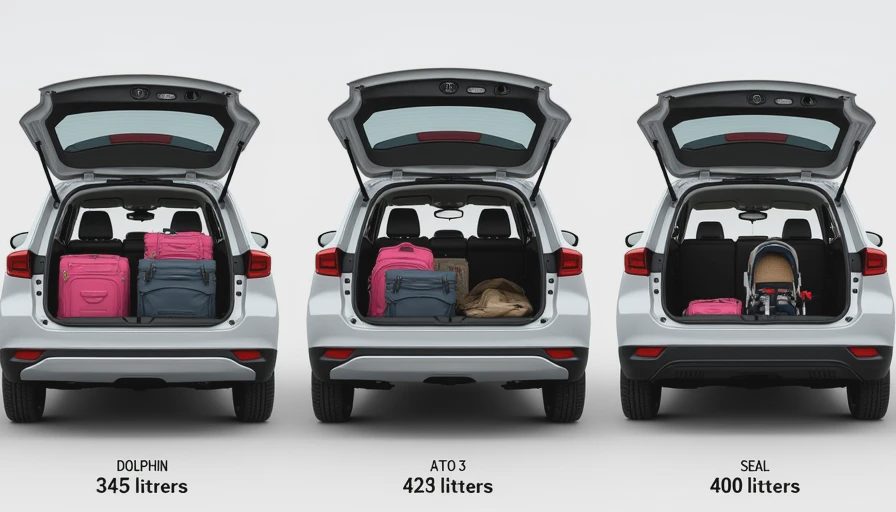
Boot capacity | 345 L | 440 L | 400 L |
Rear legroom | Excellent | Very Good | Good |
Rear headroom | Good | Excellent | Tight (over 6 ft) |
ISOFIX accessibility | Easy | Easy | Easy |
Flat rear floor | Yes | Yes | No |
The Atto 3 is the practicality champion. Its SUV body delivers the most boot space, the best rear headroom, and the easiest loading height for child seats and shopping. It's the car designed around family life.
The Dolphin surprises with excellent rear legroom — its flat floor and long wheelbase make it genuinely comfortable for adult passengers. The boot is the smallest here, but the hatchback opening is wide and practical.
The Seal prioritises style over absolute practicality. The saloon boot has a narrow opening that makes bulky items awkward. Rear headroom is tight for taller passengers due to the sloping roofline. It's practical enough for most, but families will feel the compromises.
Bottom line: The Atto 3 is the family car. The Dolphin is the urban all-rounder. The Seal sacrifices some practicality for style — most buyers will accept the trade.
Driving Experience: Three Different Personalities
The Dolphin is tuned for comfort. Soft suspension absorbs city potholes beautifully. Light steering makes parking effortless. It's relaxed and easy to drive — exactly what urban buyers want. On a twisty road, it's competent but not engaging.
The Atto 3 strikes a balance. The ride is comfortable but more controlled than the Dolphin. The higher driving position provides better visibility. It's not sporty, but it's confident and predictable. The turning circle is worse than expected — tight car parks require more manoeuvring than you'd like.
The Seal is the driver's car. Lower centre of gravity, sharper steering, and genuine composure through corners. It's the only car here that encourages you to take the long way home. The ride is firmer than its siblings but never harsh. This is a car that rewards driving.
Bottom line: The Dolphin is for comfort seekers. The Atto 3 is for those who want balance. The Seal is for people who actually enjoy driving.
Interior Quality: Where Your Money Goes
The Dolphin's interior is fun and characterful. The marine-inspired design elements — wave-pattern door cards, dolphin-shaped door handles — sound childish on paper but work surprisingly well in person. Materials are good for the price, with soft-touch surfaces where it matters.
The Atto 3 steps up noticeably. Vegan leather seats, the distinctive guitar string door trim, and a more mature design language. It feels like a more expensive car than it is. The rotating screen adds a sense of occasion.
The Seal is a genuine premium product. The interior could wear a badge costing £15,000 more and nobody would question it. Soft-touch materials everywhere, real stitching, sculpted door cards, and a general sense of solidity that surprises everyone who sits in it. This is BYD's best interior work to date.
Bottom line: The Dolphin is pleasant. The Atto 3 is impressive. The Seal is genuinely premium.
Who Should Buy Each Car
Buy the BYD Dolphin If:
Your budget is around £31,000
You drive mostly in town and suburbs
You value comfort and interior personality
You want maximum equipment for minimum money
You don't regularly do long motorway journeys
Buy the BYD Atto 3 If:
You need a family car with proper boot space
You want a higher driving position
You value practicality and durability
You have children in car seats
You want the best all-rounder for mixed use
Buy the BYD Seal If:
Your budget stretches to £49,000
You want genuine premium quality
You do regular long-distance driving
You enjoy driving and want a car that rewards it
You're cross-shopping a Tesla Model 3 or BMW i4
The Simple Recommendation
If you're buying your first electric car and you're not sure what you need, start with the BYD Atto 3. It's the middle ground — not the cheapest, not the most premium, but the one that works for the most people. It fits families, commuters, and weekend adventurers equally well.
If your budget is tight and your driving is mostly urban, the BYD Dolphin will make you happy every day while saving you thousands at purchase.
If you want the best car BYD currently makes and your budget allows it, the BYD Seal is the clear choice. It's the car that proves Chinese EVs can compete at the highest level — and win.
Three cars. Three answers. One brand. The only wrong choice is not making one at all.