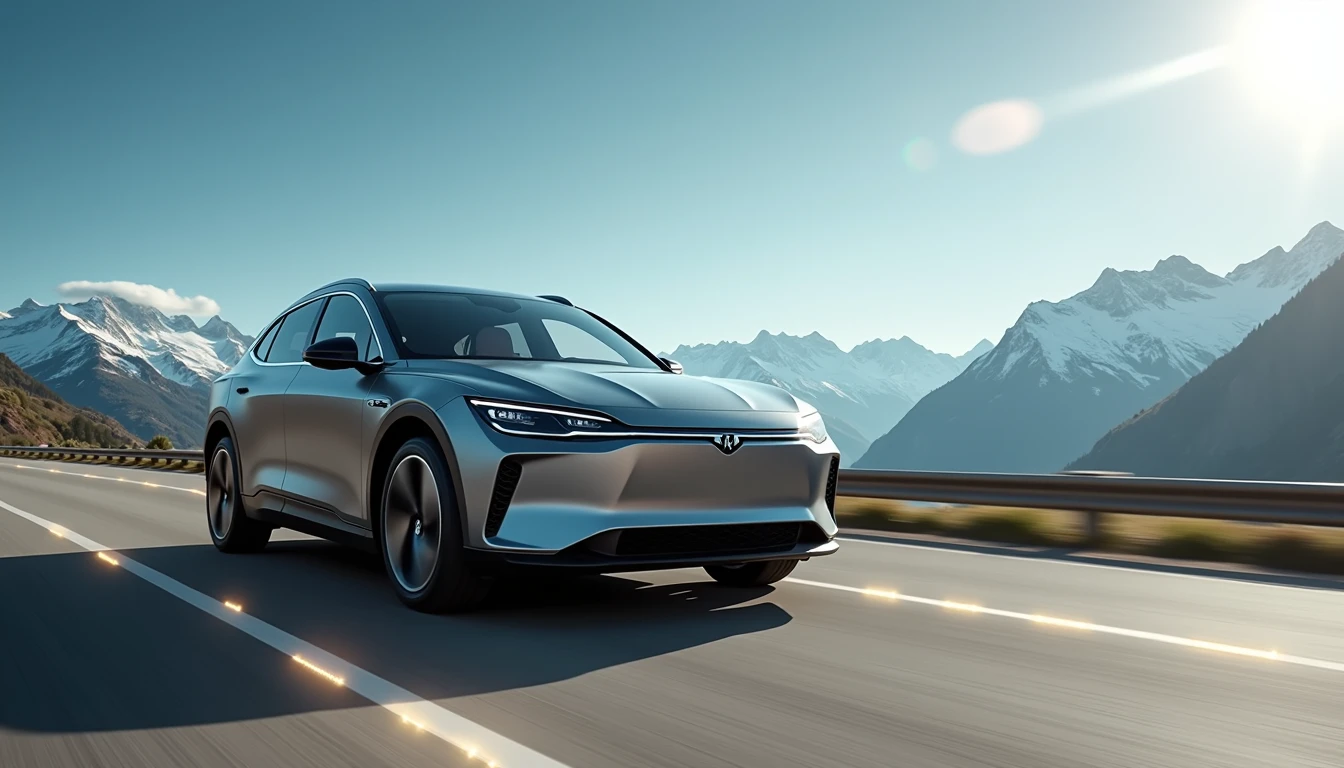
Disclosure: This trip was undertaken in a privately owned BYD Seal Excellence AWD. All costs — charging, tolls, accommodation — were paid by the author. No manufacturer support was provided. The vehicle had 8,000 km on the odometer at departure.
The Plan
London to Interlaken, Switzerland. One thousand two hundred kilometres. Five countries in a single day of driving. Two people, one weekend's luggage, and a BYD Seal with a claimed 520 km of WLTP range that we knew we'd never see at motorway speeds.
The question wasn't whether the Seal could do it. Modern EVs are capable of long journeys. The question was whether the experience would be enjoyable or merely tolerable. Whether the charging stops would feel like natural breaks or frustrating interruptions. Whether the car would prove itself a genuine grand tourer or a city car out of its depth.
Spoiler: it was brilliant. Mostly. Here's the full story.
The Outbound Journey: London to Interlaken
Distance: 1,080 km door to door
Route: London → Folkestone (Eurotunnel) → Calais → Reims → Dijon → Bern → Interlaken
Total driving time: 11 hours 15 minutes
Total charging time: 2 hours 5 minutes
Total journey time: 14 hours 50 minutes (including Eurotunnel and a proper lunch)
Charging Stop 1: Maidstone, UK (Departure Charge)
We started at 100% from our home charger. A full battery cost about £6 on our overnight tariff. The Seal's range estimator showed 495 km in Eco mode — slightly optimistic, but not dishonest given the mixed driving ahead.
Charging Stop 2: Ionity, Reims, France
Distance since start: 420 km
Battery on arrival: 18%
Charge session: 18% → 85% in 29 minutes
Cost: €28.40 (Ionity subscription rate)
The Seal pulled into Reims with 18% remaining after a steady 120–125 km/h motorway run from Calais. Real-world motorway range at French speeds: approximately 400 km. The Ionity charger delivered a consistent 140–148 kW throughout the session. We grabbed coffee and pastries from the service station. By the time we'd finished eating, the car was ready.
Thought at this stop: This is easy. Why do people worry about EV road trips?
Charging Stop 3: Ionity, Dijon, France
Distance since last stop: 280 km
Battery on arrival: 24%
Charge session: 24% → 80% in 23 minutes
Cost: €22.10
A shorter, opportunistic stop. We could have pushed further, but the charger was available, we wanted lunch, and the Seal charges fastest between 10% and 60%. The Dijon service area had a surprisingly good restaurant. Twenty-three minutes passed quickly.
Charging Stop 4: Swiss Autobahn Rest Area, Near Bern
Distance since last stop: 310 km
Battery on arrival: 15%
Charge session: 15% → 60% in 18 minutes
Cost: CHF 18.50 (approximately €19)
The final top-up before Interlaken. Swiss motorway chargers were plentiful and well-maintained. We took a short break, checked into our hotel via phone, and admired the mountains appearing on the horizon. The Seal's navigation had accurately predicted our arrival state of charge at each stop, which made planning stress-free.
Arrival in Interlaken: 22% battery remaining. The hotel had a destination charger. We plugged in overnight and woke up to a full battery. Total outbound charging cost: approximately €70.
The Return Journey: Interlaken to London
Distance: 1,080 km (same route reverse)
Charging stops: 4 (one fewer than outbound — we'd learned the car's rhythm)
The return leg was smoother. We'd developed a feel for the Seal's consumption at different speeds. We knew that 120 km/h delivered the best balance of progress and efficiency. We knew which charging networks to prioritise. We knew the car would be ready before we were at each stop.
Total return charging cost: approximately €62.
The Numbers That Matter
Metric | Outbound | Return | Total |
|---|---|---|---|
Distance | 1,080 km | 1,080 km | 2,160 km |
Charging stops | 3 | 4 | 7 |
Total charging time | 1h 10min | 1h 55min | 3h 5min |
Total charging cost | €70 | €62 | €132 |
Average consumption | 18.2 kWh/100km | 17.8 kWh/100km | 18.0 kWh/100km |
For comparison, the same trip in a petrol saloon averaging 45 mpg would have cost approximately £220–£260 in fuel at current European prices. The EV saved roughly £100–£140 on energy costs alone. The time cost — the extra hours spent charging versus refuelling — was about two hours over the entire trip.
What Worked Perfectly
The Seat Comfort: After 11 hours behind the wheel, I stepped out of the Seal without back pain. The seats are superb — supportive without being hard, adjustable enough to find the perfect position, with ventilation that kept us comfortable through a surprisingly warm French afternoon. This is the most important feature of any long-distance car, and the Seal nails it.
The Ride Quality: French autoroutes are smooth. Swiss motorways are smoother. But the Seal's suspension handled every surface with composure. At 130 km/h, the cabin was quiet enough for conversation at normal volume. Wind noise was present but never intrusive. Tyre roar on coarse French asphalt was noticeable but not fatiguing.
The Charging Network: Ionity is the unsung hero of European EV travel. Six of our seven charging stops were on Ionity chargers. Every single one worked first time. Every single one delivered full power. Payment was automatic through the app. There was no queue at any of them. The experience was as seamless as filling up with petrol, just slightly longer.
The Navigation: The Seal's route planner with charging stops was genuinely useful. It predicted arrival charge within 2–3% accuracy. It suggested charging stops at sensible intervals. It took the stress out of range management. I stopped checking the battery percentage obsessively after the first few hours.
What Could Have Been Better
The Charging Speed Is Adequate, Not Class-Leading: The Seal's 150 kW peak is fine. But having driven an 800V vehicle on the same route previously, the difference is real. An XPeng G9 or Porsche Taycan would have spent 30–40% less time plugged in. The Seal was always ready before we were, so it didn't matter in practice. But if you're the type who wants to minimise every stop, the BYD isn't the fastest tool for the job.
The Boot Could Be Bigger: The Seal's 400-litre boot is adequate for two people on a weekend trip. With rear passengers or a longer journey requiring more luggage, space would get tight. The saloon boot opening is narrow, making bulky items awkward. A hatchback version of the Seal would transform its practicality.
The Voice Assistant Doesn't Help Abroad: The native voice assistant struggled with French and German place names. "Navigate to Reims" was interpreted as "Navigate to Rheims" and then failed to find it. We used CarPlay for navigation, which solved the problem entirely. But it highlighted the gap between BYD's native software and the smartphone systems most owners actually use.
The Verdict: Can You Road Trip a BYD Seal?
Yes. Without hesitation.
The Seal is a genuinely capable long-distance car. It's comfortable. It's efficient. It charges quickly enough that the stops feel like natural breaks rather than frustrating delays. The European charging network — particularly Ionity — has reached a tipping point where EV road trips are no longer adventures requiring careful planning and contingency routes. You just get in and drive.
The 1,200 km trip took about two hours longer than it would have in a petrol car, door to door. But those two hours were spent eating proper meals, stretching our legs, and enjoying the journey rather than staring at a motorway service station while inhaling a sandwich. The enforced breaks are a feature, not a bug, on a trip like this.
Would I do it again? I'm already planning the next one. Norway, maybe. Or down to Italy. The Seal has proven itself. The Alps are calling. And I'm not the slightest bit worried about getting there.