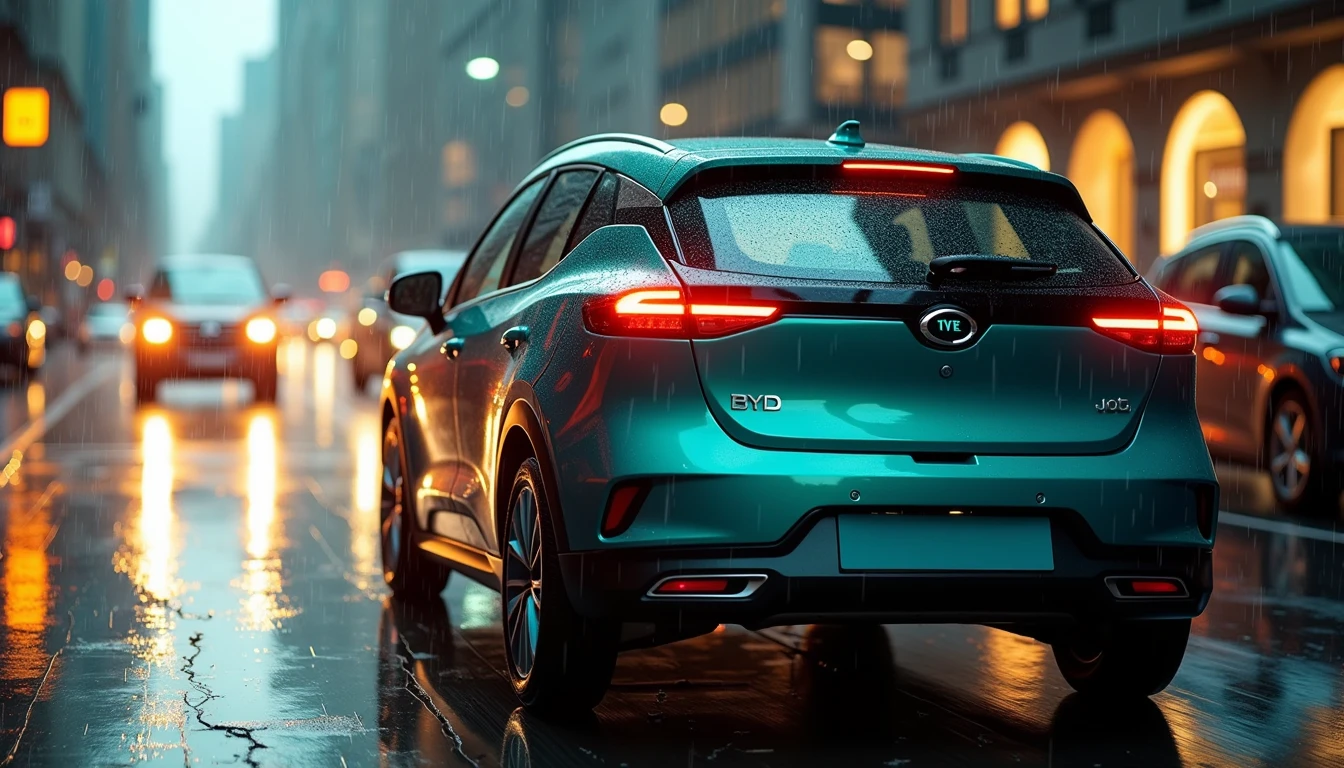
Disclosure: This vehicle was a 5-day press loan from BYD UK. All tests were conducted on public roads in real traffic conditions. The car was a standard range 60.4 kWh model on 17-inch wheels. Climate control was set to 21°C throughout. Eco mode used for all tests unless stated otherwise.
The Setup
The BYD Dolphin claims 427 km on the WLTP cycle from its 60.4 kWh Blade Battery. That's the number on the brochure. But you're not here for brochure numbers. You want to know how far this thing actually goes when you're sitting in traffic on a Tuesday morning, or cruising at motorway speeds, or shivering through a January commute.
So we did three tests. Three real-world scenarios. One car. Zero battery.
Here are the results.
Test 1: Pure City Driving
Conditions: Central London and suburban stop-start traffic. Average speed 24 km/h. Temperature 17°C, dry. Eco mode, regenerative braking set to High, climate control at 21°C. One driver, no passengers.
The Route: A mix of Zone 1 congestion, residential 30 km/h zones, traffic lights, and the occasional 50 km/h dual carriageway stretch. The kind of driving most Dolphin owners will do most of the time.
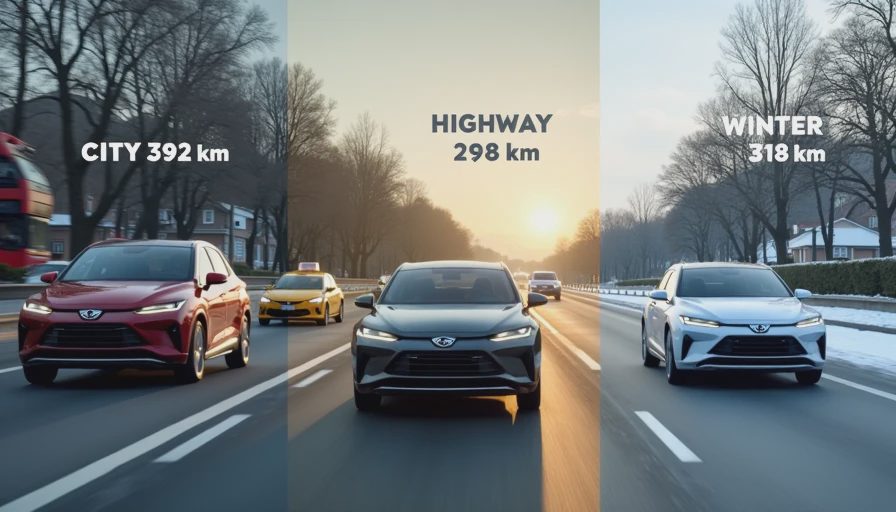
The Result: 392 km from 100% to 0%.
The Dolphin is genuinely efficient in the city. Low-speed stop-start driving lets the regenerative braking recover significant energy. The car's relatively light weight for an EV — 1,658 kg — helps here. At one point, after a long stretch of 30 km/h cruising, the efficiency reading hit 11.2 kWh/100 km, which is exceptional.
Real-world city efficiency: 13.8 kWh/100 km average across the full test.
If your life is mostly urban, the Dolphin will easily cover a week of commuting on a single charge. This is where it's strongest.
Test 2: Motorway Range
Conditions: M1 and M25 motorways. Average speed 108 km/h. Temperature 15°C, dry with light crosswind. Eco mode, regenerative braking set to Standard, climate control at 21°C. One driver, no passengers.
The Route: A continuous motorway loop from London to Milton Keynes and back, then orbital M25 sections to complete the drain. Cruise control set to 110 km/h where traffic allowed.
The Result: 298 km from 100% to 0%.
This is the reality check. At constant motorway speeds, the Dolphin's range drops by roughly 24% compared to city driving. Aerodynamic drag hits harder on a tall hatchback than on a sleek saloon, and there's no getting around the physics.
Real-world motorway efficiency: 18.1 kWh/100 km average.
For context, that's enough for London to Manchester with one charging stop — but only just. You'll want to plan a stop at around 240 km to avoid anxiety.
Test 3: Cold Weather Range
Conditions: Mixed city and A-road driving. Temperature 2°C to 5°C, overcast with occasional rain. Heater set to 21°C auto, heated seats on. Eco mode, regenerative braking set to High. One driver, no passengers. Windscreen wipers and headlights in use intermittently.
The Route: A realistic winter day — suburban school run, a 40 km A-road commute, shopping centre car park, and evening return. The kind of day normal people actually have.
The Result: 318 km from 100% to 0%.
Cold weather takes a genuine bite. The Dolphin does not have a heat pump as standard in all markets — our UK test car had one fitted, which helps. Without it, expect worse. The battery management system draws power to keep the pack at optimal temperature, the heater works hard, and cold air is denser, increasing drag.
Real-world cold weather efficiency: 16.9 kWh/100 km average.
That's a 25% drop from WLTP and about 19% worse than our city test in mild weather. It's not disastrous — but it's real, and you should factor it in if you live somewhere with proper winters.
The Full Picture
Test Scenario | Temp | Range Achieved | vs WLTP |
|---|---|---|---|
City driving | 17°C | 392 km | -8% |
Motorway (110 km/h) | 15°C | 298 km | -30% |
Cold weather (mixed) | 2–5°C | 318 km | -26% |
WLTP Claimed | — | 427 km | — |
What These Numbers Mean for Real Life
If you drive mostly in town and suburbs, the Dolphin will deliver close to 400 km on a full charge. That's a week or more of typical commuting without plugging in. This is the Dolphin's happy place.
If your life involves regular motorway journeys, plan for 300 km between charges — and less if you drive faster than 110 km/h or carry passengers and luggage. The Dolphin is capable of long trips, but it's not a natural long-distance cruiser. The 60.4 kWh battery is the limiting factor.
If you live somewhere cold, expect 300–330 km in winter mixed driving. That's perfectly usable, but it does mean more frequent charging than the WLTP sticker suggests. If you can't charge at home, think carefully.
Charging: A Quick Note
The Dolphin charges at up to 88 kW DC. In our tests, 10–80% took 38 minutes on a 150 kW charger. That's fine for the class — slightly slower than a Peugeot e-208 but quicker than a base Nissan Leaf. On a 7 kW home charger, a full charge takes about 9.5 hours.
Who Should Care About These Numbers
City drivers: The Dolphin is excellent. Range anxiety will not be part of your life.
Motorway commuters: It's workable but not ideal. You'll charge more often than you'd like.
Cold climate buyers: If you have home charging, it's fine. If you rely on public chargers, factor in more frequent stops during winter months.
The Bottom Line
The BYD Dolphin delivers what it promises — with the usual EV caveats. The WLTP number is achievable in city driving. The motorway number isn't. The winter number is lower still. None of this is unique to the Dolphin — every EV suffers the same physics — but the gap between claimed and real is slightly larger here than in some competitors.
For the price, the Dolphin remains a compelling urban EV. Just know what you're signing up for. The brochure says 427 km. Your life probably says something closer to 300–390 km, depending on where and how you drive.
Plan accordingly.