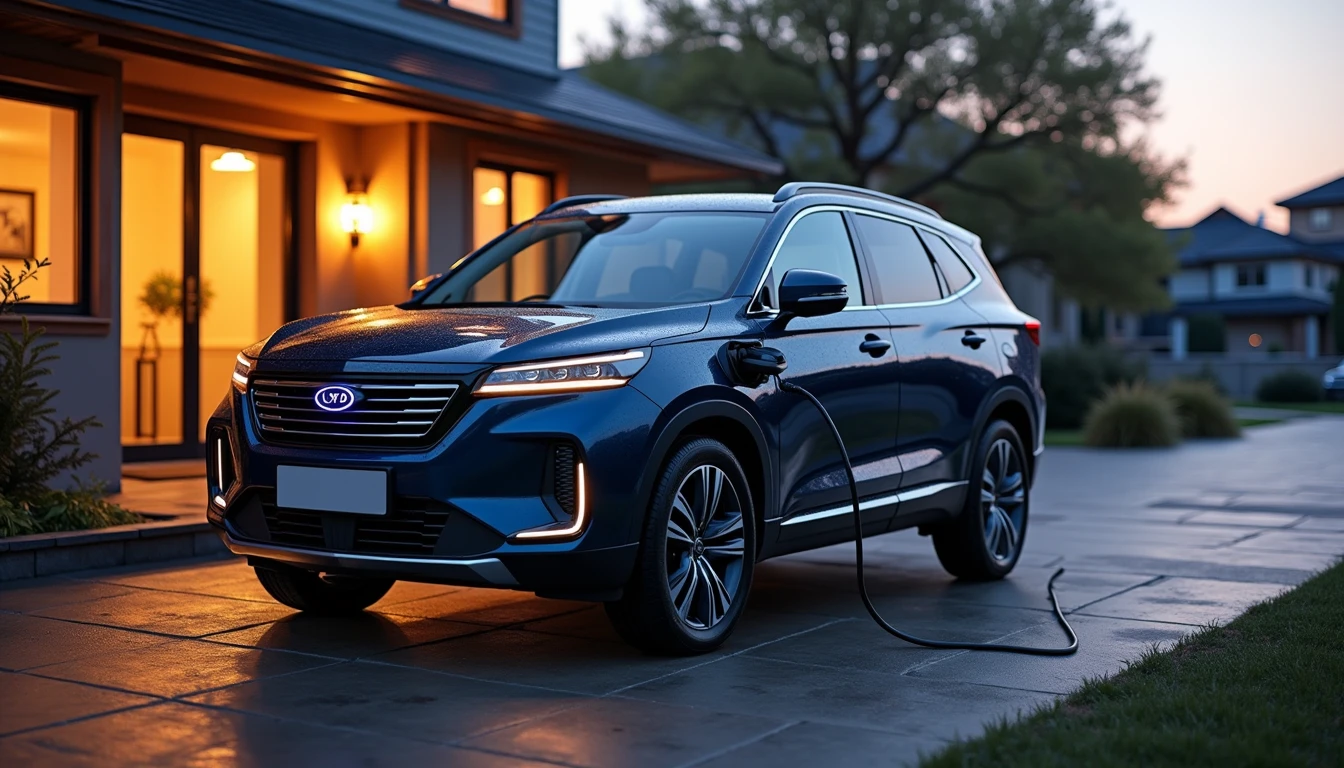
Disclosure: This vehicle was a 7-day press loan from BYD UK. It was the Sealion 6 DM-i Super Hybrid in Design trim. All fuel and charging costs were paid by us. Testing included city commuting, motorway runs, and a weekend family trip.
The Short Version
Most plug-in hybrids don't make sense. You charge them, get 50 km of electric range, then lug around a dead battery and a thirsty petrol engine for the rest of the journey. The BYD Sealion 6 does something different — and after a week of real-world driving, I'm genuinely impressed. It's not perfect. But it might be the first PHEV I'd actually recommend to a friend.
What Makes the DM-i System Different
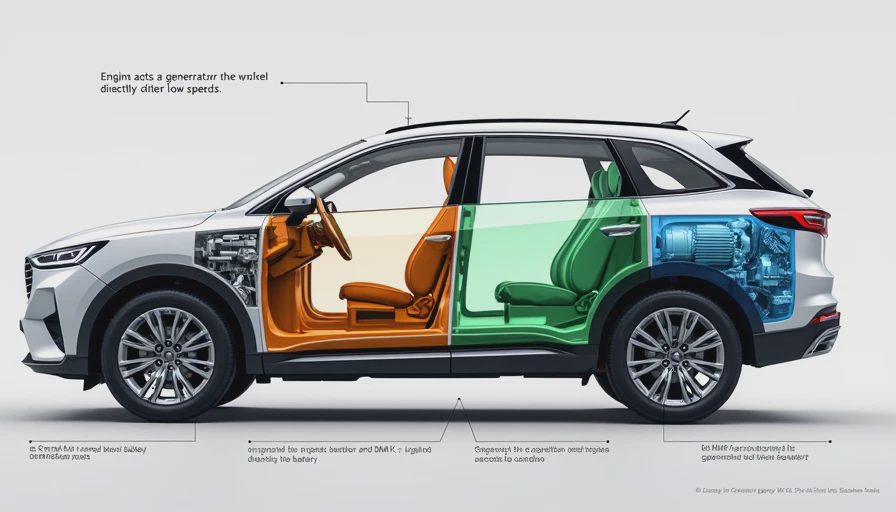
Most PHEVs use a parallel hybrid setup — the petrol engine and electric motor can both drive the wheels, switching back and forth. The Sealion 6 uses BYD's DM-i system, which works differently.
In most driving conditions, the petrol engine doesn't drive the wheels at all. It acts as a generator, producing electricity for the electric motor. The car is effectively an EV most of the time, with the engine serving as an onboard power station. Only at higher speeds does the engine clutch in to drive the wheels directly, and even then the electric motor assists.
Why does this matter? Because it means the engine runs at its most efficient RPM whenever it's on. There's no revving through gears, no inefficient low-speed petrol driving. The system is clever, and on the road, it's seamless.
Electric-Only Range: The Number That Matters
The Sealion 6 has an 18.3 kWh Blade Battery — decent for a PHEV. BYD claims up to 80 km of electric-only range. Here's what I measured.
Condition | Temperature | EV Range Achieved |
|---|---|---|
City and suburban, Eco mode | 16°C | 74 km |
Mixed, Normal mode | 14°C | 68 km |
Motorway, 110 km/h (EV only) | 12°C | 55 km |
Cold weather, heater on | 4°C | 52 km |
In town, the claimed 80 km is optimistic but not dishonest — 74 km is close enough. On the motorway, the electric range drops significantly, which is expected. In winter, expect around 50–55 km.
For context, the average UK commute is about 30 km round trip. The Sealion 6 covers that comfortably on electric power alone, with range to spare for errands. If you charge at home every night, you could go weeks without the petrol engine starting.
Fuel Economy: When the Battery Runs Out
This is where PHEVs usually fall apart. Once the battery is depleted, many become worse on fuel than their non-hybrid equivalents. The Sealion 6 does not.
Scenario | Fuel Consumption |
|---|---|
Battery depleted, mixed driving | 5.2 L/100 km |
Battery depleted, motorway at 110 km/h | 6.1 L/100 km |
Full battery, mixed (calculated combined) | 1.8 L/100 km* |
*This figure includes charged electricity and is an average across the full test week with daily home charging.
5.2 L/100 km from a mid-size SUV with a depleted battery is genuinely good. For comparison, a Toyota RAV4 Hybrid — widely considered the efficiency benchmark — manages about 5.5–6.0 L/100 km in similar conditions. The DM-i system delivers on its promise: even when the battery is empty, it's still a proper hybrid, not a penalty box.
What It's Like to Drive
The Sealion 6 is front-wheel drive only in most markets, with a combined system output of 218 hp. That's adequate but not exciting. 0–100 km/h takes 8.3 seconds. It's a family SUV, not a sports car, and it doesn't pretend otherwise.
What impresses is the refinement. In electric mode, it's silent. When the petrol engine kicks in to generate electricity, it hums quietly in the background — far less intrusive than a traditional PHEV engine starting up. The transition between power sources is imperceptible. Passengers don't notice.
The ride is tuned for comfort. It soaks up UK potholes better than many rivals, including the RAV4. Steering is light and accurate but completely devoid of feel — fine for a family car, disappointing if you enjoy driving.
One complaint: At motorway speeds, wind noise from the door mirrors is noticeable. It's not terrible, but it's louder than the class leaders.
Interior and Practicality
The Sealion 6 is a five-seat SUV with a 574-litre boot — bigger than a RAV4, smaller than a CR-V. It swallowed a family weekend's luggage without drama.
The interior follows the same pattern as other recent BYDs: genuinely good materials, questionable design choices. The dashboard is soft-touch and well-assembled. The vegan leather seats are comfortable and heated. The 12.8-inch rotating screen is the same unit found in the Atto 3 — responsive, sharp, and saved by wireless Apple CarPlay.
The annoying bits: the gear selector is a tiny crystal-like toggle that looks like it belongs in a concept car, not a family SUV. The piano black trim is everywhere and attracts fingerprints like a crime scene investigator. The voice assistant still doesn't understand British accents.
Rear space is excellent. Two six-foot adults can sit comfortably, and the flat floor means the middle seat is usable for shorter journeys. ISOFIX points are easy to access. BYD clearly designed this for families.
Running Costs: The PHEV Sweet Spot
Here's what a week looked like with daily home charging.
Item | Cost |
|---|---|
Electricity (7.5p/kWh overnight, 7 charges) | £9.60 |
Petrol (one longer trip, 180 km) | £14.20 |
Total for 480 km | £23.80 |
That's about 5.0p per km — comparable to a pure EV and significantly cheaper than a petrol SUV. The Sealion 6 only makes financial sense if you charge it regularly. If you never plug it in, you're carrying around a heavy battery for no reason and losing the cost advantage.
Tax benefits vary by market. In the UK, the Sealion 6 qualifies for a lower Benefit-in-Kind rate than non-hybrid SUVs, which makes it attractive for company car drivers. Check your local incentives.
Three Things to Know
1. No all-wheel drive option. In most export markets, the Sealion 6 is front-wheel drive only. If you need AWD for snow or towing, look elsewhere — or wait for the dual-motor version rumoured for later release.
2. The charger is slow for a PHEV. Maximum AC charging is 6.6 kW. A full charge takes about 3 hours on a 7 kW home charger. It's an overnight job, not a quick top-up. There's no DC fast charging — which is normal for PHEVs, but worth knowing.
3. The app is improving. BYD's smartphone app lets you pre-condition the cabin, check charge status, and locate the car. It's not as polished as Tesla's app, but it's functional and has improved noticeably via updates. One annoying quirk: it logs you out more often than it should.
Who Should Buy the BYD Sealion 6
You want an SUV that handles daily driving on electric power but can do long road trips without charging anxiety. You have a driveway or garage with a charger. You value comfort and interior space over sporty handling. You want a PHEV that's actually efficient even when the battery is empty.
Who Should Skip It
You don't have home charging — the PHEV formula collapses without it. You need all-wheel drive. You regularly tow heavy loads. You want a premium badge. You're bothered by wind noise at speed.
Verdict
The BYD Sealion 6 is the most sensible PHEV I've tested. The DM-i system solves the fundamental problem of plug-in hybrids — the guilt and inefficiency of driving on petrol with a dead battery — by being genuinely efficient in both modes. It's comfortable, spacious, well-equipped, and surprisingly refined.
It's not exciting. It's not fast. The infotainment has quirks. The wind noise at motorway speeds is real.
But for a family that wants to go electric for daily life without giving up the ability to drive 500 km in a day without planning charging stops, the Sealion 6 is the best answer currently on the market. It's a car that actually makes sense — and in the PHEV world, that's rare.