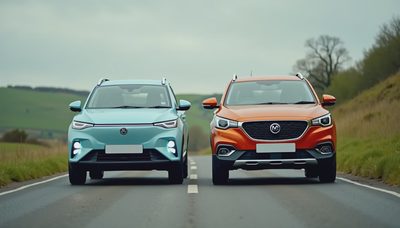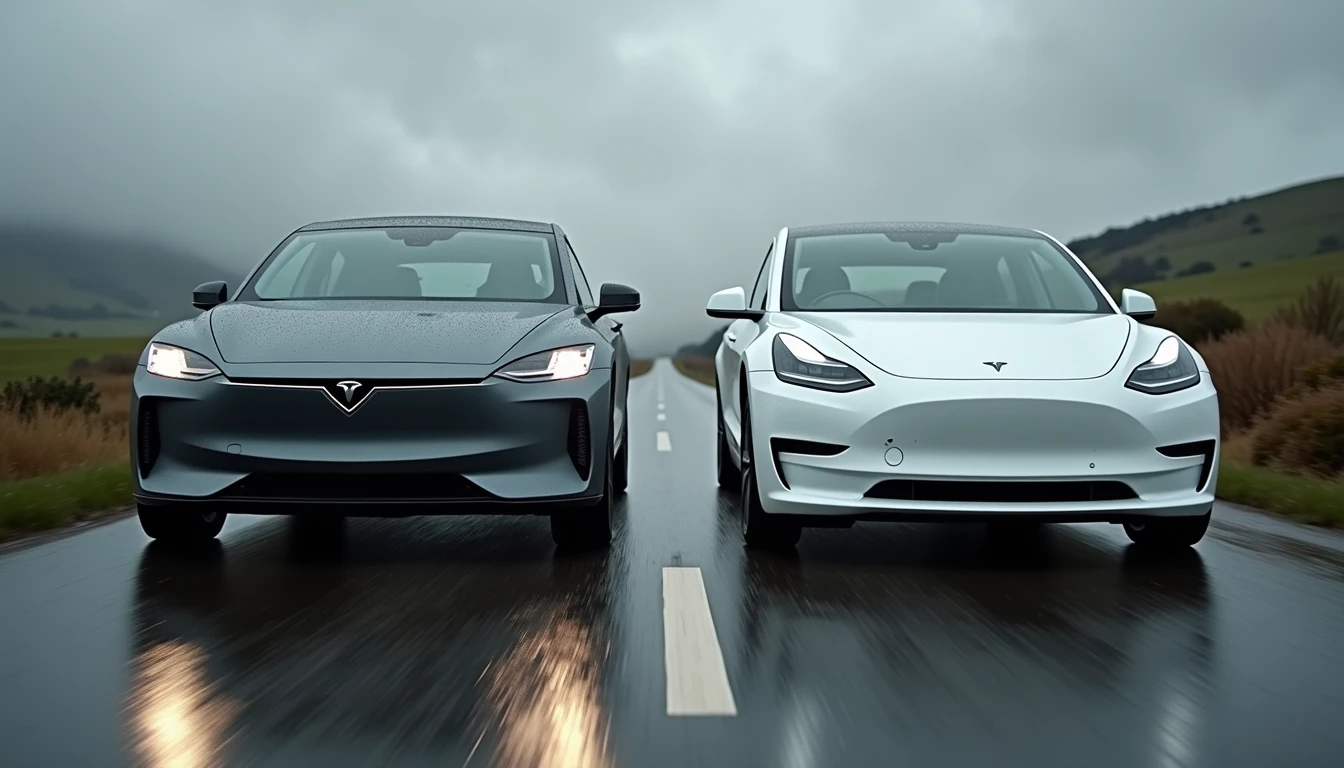
Disclosure: Both vehicles were 7-day press loans. The BYD Seal was a dual-motor Excellence AWD. The Tesla Model 3 was a Long Range dual-motor. Both were driven on the same roads, in the same weather, by the same driver.
The Setup
The refreshed Tesla Model 3 is the default choice in the electric saloon segment. It's the safe bet, the car your neighbour recommends because their neighbour recommended it. The BYD Seal is the newcomer with something to prove — more power, a bigger battery on paper, and a price tag that undercuts the Tesla by several thousand pounds in most markets.
After a week in each, here's how they stack up across twelve categories that actually matter to buyers.
Round 1: Range and Efficiency
Condition | BYD Seal (AWD) | Tesla Model 3 (LR AWD) |
|---|---|---|
Mixed real-world (18°C) | 460 km | 495 km |
Motorway, 110 km/h | 390 km | 425 km |
Winter mixed (4°C) | 360 km | 380 km |
Claimed WLTP | 520 km | 629 km |
Tesla wins on paper and on the road. The Model 3 extracts more kilometres from fewer kilowatt-hours — its efficiency advantage is roughly 12% in real driving. The Seal's 82.5 kWh battery is actually larger than the Tesla's, but it can't match the Tesla's energy management.
Winner: Tesla Model 3
Round 2: Charging Speed
Metric | BYD Seal | Tesla Model 3 |
|---|---|---|
Peak DC speed | 150 kW | 250 kW |
10–80% time (measured) | 32 minutes | 27 minutes |
Range added in 15 minutes | 190 km | 245 km |
The Seal's 150 kW peak is perfectly adequate. The Tesla's 250 kW is genuinely fast. More importantly, Tesla's Supercharger network remains a decisive advantage — seamless payment, reliable uptime, and far more locations. The Seal charges fine on third-party networks, but the experience is less polished.
Winner: Tesla Model 3
Round 3: Build Quality and Materials
This is where the script flips.
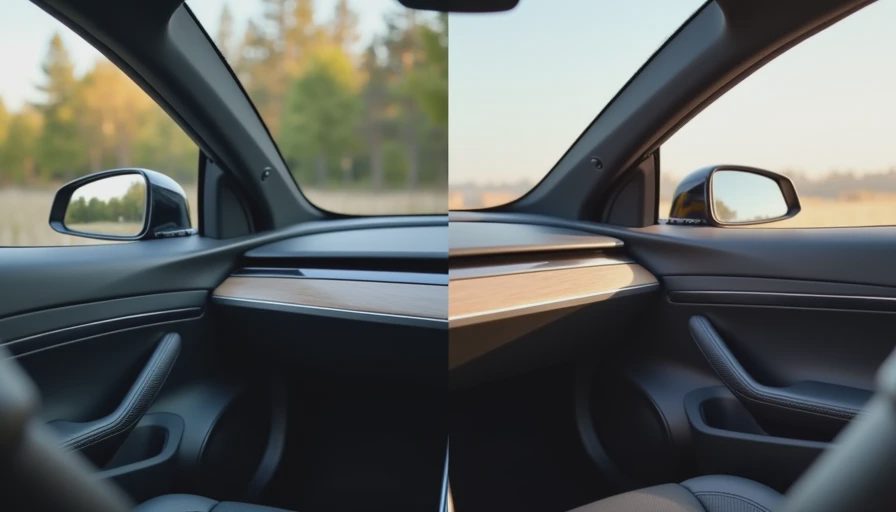
The Seal's interior feels expensive. Soft-touch materials everywhere, real stitching, a sculpted dashboard, and a general sense of solidity that surprises everyone who sits in it. Panel gaps are consistent. Doors close with a satisfying thunk. It feels like a car that costs more than it does.
The Tesla is improved from earlier generations but still inconsistent. Our test car had uneven trim alignment on the passenger door and a slightly misaligned frunk lid. The materials are fine — but at this price, "fine" isn't a compliment.
Winner: BYD Seal
Round 4: Interior Comfort and Space
Both cars seat four adults comfortably. Five is a squeeze in either.
The Seal has better front seats — more supportive, better lateral bolstering, and the ventilation function actually works well. Rear headroom is slightly tighter due to the sloping roofline. Anyone over six feet tall will notice.
The Model 3 has a more open cabin feel thanks to the glass roof and lower window line. Rear legroom is comparable. The Tesla's seats are flatter but perfectly comfortable for long journeys.
Winner: Tie
Round 5: Infotainment and Software
Tesla's software is the benchmark for a reason. Responsive, intuitive, constantly improving via OTA updates. The route planner with Supercharger integration is genuinely brilliant. The screen interface makes sense within five minutes.
The Seal's 15.6-inch rotating screen is a great piece of hardware let down by software that feels two generations behind. It works — wireless CarPlay helps enormously — but the native interface has translation quirks, menu structures that require too many taps, and a voice assistant that doesn't understand British accents.
Winner: Tesla Model 3 (by a wide margin)
Round 6: Driver Assistance Systems
Tesla's Autopilot remains one of the smoothest systems on the market. Lane centering is confident without being intrusive. The system inspires trust.
The Seal's lane-keeping is overactive and cannot be permanently disabled — it resets to ON with every restart. On narrow UK roads, it nudges the wheel at exactly the wrong moments. Adaptive cruise control is fine. The rest needs work.
Winner: Tesla Model 3
Round 7: Ride Quality and Refinement
The Seal rides beautifully. BYD's suspension tuning is a genuine highlight — composed over broken pavement, settled at motorway speeds, and quieter than the Tesla at 110 km/h. Wind noise is lower. Tyre roar is better suppressed.
The Model 3 is firmer. The refreshed version improved suspension compliance, but it still transmits more road surface information than the Seal. It's not uncomfortable — but back-to-back, the BYD is the car you'd choose for a long journey.
Winner: BYD Seal
Round 8: Performance and Driving Fun
The Seal's dual-motor setup produces 530 hp and hits 100 km/h in 3.8 seconds. The Model 3 Long Range manages 4.4 seconds. Numbers don't lie: the Seal is faster in a straight line.
But driving fun isn't just about acceleration. The Tesla feels lighter on its feet, with sharper steering and better body control in corners. The Seal is quick but slightly remote — you're aware of the weight. The Tesla shrinks around you on a good road.
Winner: Tesla Model 3 (handling), BYD Seal (straight-line speed). Overall: Tesla Model 3.
Round 9: Practicality and Storage
Feature | BYD Seal | Tesla Model 3 |
|---|---|---|
Boot capacity | 400 litres | 594 litres (incl. frunk) |
Frunk | No | Yes (88 litres) |
Powered tailgate | Yes | Yes |
60/40 split rear seats | Yes | Yes |
The Tesla simply holds more stuff. The powered tailgate is now standard on both. The Seal's saloon boot opening is narrower, making bulky items awkward. The Tesla's hatch-style opening and front trunk give it a clear practicality advantage.
Winner: Tesla Model 3
Round 10: Design and Road Presence
This is subjective, but worth including because buyers care.
The Seal is a genuinely handsome car. Low, wide, with a sculpted side profile and tasteful detailing. It looks more expensive than it is, and it draws attention wherever it goes. The Tesla is clean and minimalist — almost anonymous now given how many are on the road.
If you want to blend in, buy the Tesla. If you want strangers to ask what you're driving, buy the Seal.
Winner: BYD Seal
Round 11: Price and Value
UK pricing at time of writing:
Model | Starting Price |
|---|---|
BYD Seal Excellence AWD | £48,695 |
Tesla Model 3 Long Range AWD | £49,990 |
The Seal undercuts the Tesla by about £1,300 while offering more power, a larger battery, and a longer standard warranty. However, Tesla's resale values are stronger, which narrows the total ownership cost gap.
In markets like Australia and Southeast Asia, the Seal's price advantage is significantly larger — sometimes £6,000 or more.
Winner: BYD Seal (on upfront price; check resale values in your market)
Round 12: The Ownership Experience
Tesla has a mature service network, a proven OTA update track record, and an ecosystem that includes insurance, energy products, and a vast Supercharger network. You know what you're getting.
BYD is still building its presence in Western markets. Service centres are expanding but remain sparse in some regions. OTA updates are happening — but less frequently and with less transparency than Tesla. Long-term reliability data is limited simply because the cars haven't been around long enough.
Winner: Tesla Model 3
Final Scorecard
Round | Winner |
|---|---|
1. Range and Efficiency | Tesla |
2. Charging Speed | Tesla |
3. Build Quality | BYD |
4. Interior Comfort | Tie |
5. Infotainment | Tesla |
6. Driver Assistance | Tesla |
7. Ride Quality | BYD |
8. Performance | Tesla |
9. Practicality | Tesla |
10. Design | BYD |
11. Price and Value | BYD |
12. Ownership Experience | Tesla |
Final count: Tesla 7, BYD 4, Ties 1.
The Honest Verdict
The Tesla Model 3 wins more rounds, and it wins the ones that matter most: range, charging, software, and ownership infrastructure. It's the logical choice for most buyers. It does everything well enough, and a few things brilliantly.
But the BYD Seal wins the rounds that surprise people: build quality, ride comfort, design, and sheer value for money. It's the emotional choice — the car that feels more special every time you sit in it, even if the software frustrates you occasionally.
Buy the Tesla if: You want the most efficient, best-supported electric saloon with the least friction in daily life. You do regular long-distance trips. You value software excellence.
Buy the BYD Seal if: You want more car for less money. You prioritise ride comfort and interior quality. You can live with software that's adequate rather than exceptional. You want something different.
There is no wrong choice here. That's the real headline. The fact that a BYD can genuinely compete with a refreshed Model 3 — and win in categories that matter emotionally — is remarkable. The gap is real, but it's narrowing faster than most people realise.