Disclosure: This article reflects my personal experience owning a BYD Atto 3 in the UK for one year. Your experience may vary depending on where you live, your social circles, and the specific vehicle you own. No manufacturer input was provided.
The Question I Get Most Often
It's not about range. It's not about charging. It's not about the guitar strings on the doors or the rotating screen.
The question I get most often, asked in lowered voices at dinner parties and shouted across petrol station forecourts, is this:
"Is it actually any good?"
The emphasis varies. Sometimes it lands on "actually." Sometimes on "any." Sometimes the whole question is delivered with an eyebrow raised so high it threatens to leave the speaker's face entirely.
What they're really asking: can you trust a Chinese car? Not just the engineering — the whole proposition. The brand. The warranty. The long-term commitment of a company based in Shenzhen to a customer in Manchester. The question behind the question is always the same.
I've been answering it for a year. Here's what I've learned about the car, about other people, and about the strange social position of being an early adopter of something that was never supposed to succeed.
The Strangers

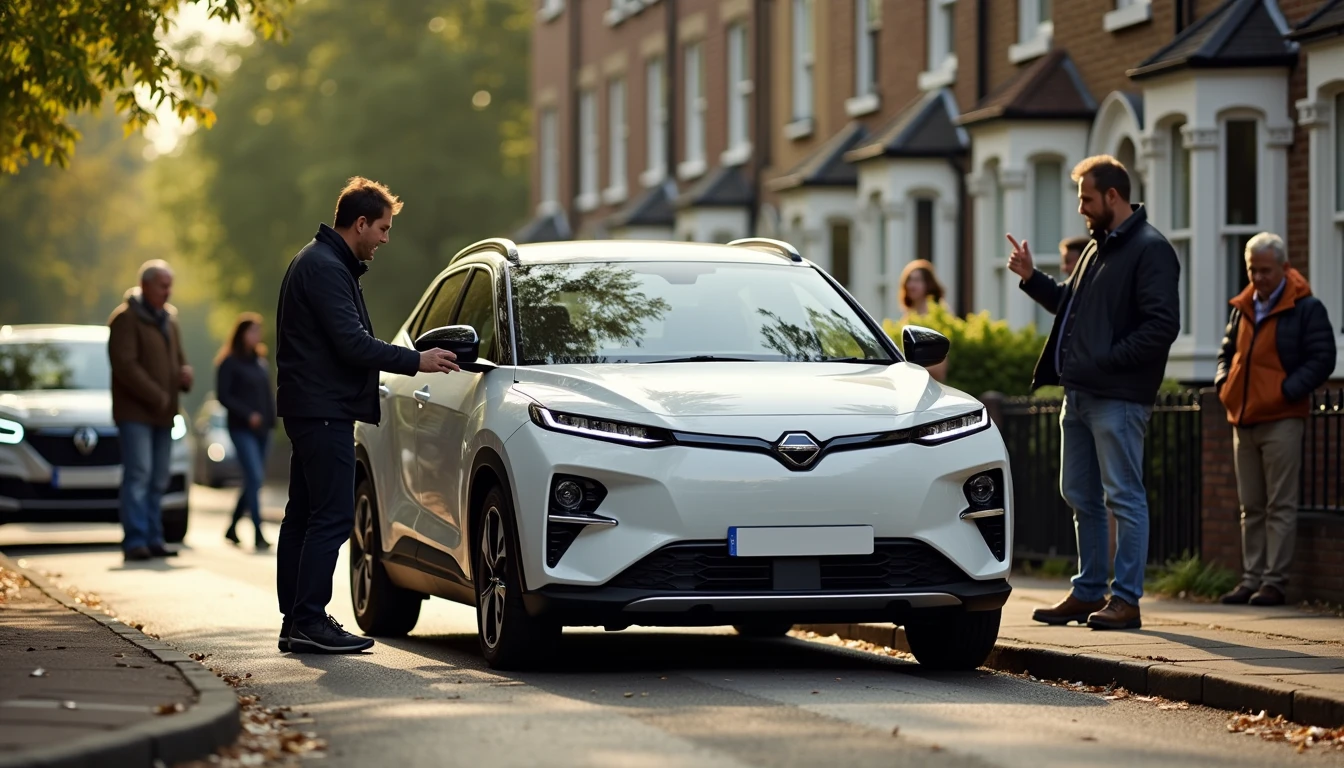
They approach in car parks. At charging stations. Once at a set of traffic lights, which was unsettling but surprisingly flattering.
The conversations follow a pattern. First comes recognition — their eyes catch the BYD badge, and you can see them processing the unfamiliar letters. Then curiosity. Then the approach.
The questions are almost never hostile. They're genuinely curious. The most common ones, in order:
"What is it?" Still the most frequent opener, though less common than a year ago. BYD's brand awareness is climbing fast in the UK. Increasingly, people know the name before I say it.
"Is it electric?" Almost always yes, followed by a brief explanation that BYD only makes electric and plug-in hybrid vehicles. This surprises people. Many still associate Chinese cars with cheap petrol hatchbacks from a decade ago.
"How far does it go?" The universal EV question. I give them the honest answer: 350–400 km in summer, 280–310 km in winter. They almost always nod thoughtfully, as if they were expecting less.
"Would you buy another one?" This is the real question. The one that cuts through the curiosity to something more consequential. When I say yes, people lean in. They want to know why. They're mentally filing the information for their own future decisions.
"What if it breaks?" The warranty question. I explain the 6-year vehicle warranty, the 8-year battery warranty, the service centre 20 minutes from my house. They look relieved, as if they'd assumed there was no support infrastructure at all.
I've had this conversation maybe thirty times in a year. It's never unpleasant. It's rarely brief — people want details, and once they start asking, they keep going. I've learned to factor an extra five minutes into any charging stop for the social element.
The Friends and Family
Close friends ask harder questions. They're not curious. They're concerned. They don't want to offend, but they also don't want me to have made an expensive mistake.
The questions from people who know me well tend to cluster around three themes:
Quality anxiety: "But aren't Chinese cars supposed to fall apart?" This is the legacy of early-2000s Chinese car exports, which were genuinely terrible, and which created a reputation that modern Chinese EVs are still fighting against. I show them the interior. I let them sit in the driver's seat. I point out the panel gaps and the soft-touch materials. The evidence usually speaks louder than the reputation.
Political discomfort: "Do you worry about where your money is going?" This question comes less often than I expected, but it comes. My answer is honest: every global product exists within complex geopolitical realities, and I don't have clean hands with any purchase. The phone in my pocket. The laptop on my desk. The petrol in my previous car. I made a judgment call. I'm comfortable with it. The conversation usually moves on.
Resale anxiety: "What's it going to be worth in three years?" The honest answer is that nobody knows. Chinese EV resale values are still being established. MG has decent data. BYD data is limited but improving. I explain that I bought the car to keep it, not to flip it, and that the running cost savings will likely offset any depreciation difference. The financially literate ones run the numbers and usually agree.
The shift I've noticed: A year ago, friends asked these questions with genuine concern. Now they ask with genuine curiosity. The tone has shifted from "are you sure about this?" to "tell me more." That's a meaningful change in twelve months.
The Online Experience
Owning a Chinese car means occasionally encountering opinions about Chinese cars online. Some of these opinions are informed. Many are not.
The internet has strong feelings about Chinese vehicles, and most of those feelings were formed without ever sitting in one. The comments sections of EV forums contain a predictable taxonomy:
The geopolitics-first commenter: "Wouldn't touch anything Chinese with a barge pole." Usually no further detail provided. Not really about cars at all.
The quality-sceptic: "Give it three years and it'll be rattling like a tin can." Often someone whose last experience of a Chinese product was a phone charger that stopped working in 2009.
The data-curious: "What's your real-world range? How's the service experience? Any issues?" These are the good ones. They're asking because they're considering a purchase themselves. They want actual owner data rather than speculation. I answer every one of these.
The pleasant surprise: Over the past year, the ratio has shifted. There are more data-curious commenters and fewer geopolitics-first dismissals. The cars are proving themselves on the road, and the online discourse is slowly catching up. The arrival of respected reviewers giving Chinese EVs positive coverage has helped enormously.
My advice to other owners: engage with the data-curious, ignore the bad-faith commenters, and let the car speak for itself. It's better at changing minds than any argument you could make.
The Dealership Experience
Walking into a BYD dealership in 2025 felt different from walking into a BMW or Ford showroom. The salespeople were learning on the job. The brochures had occasional translation quirks. The coffee was instant.
Walking into the same dealership in 2026 feels different again. The sales staff know the product. The showroom is polished. The whole operation has matured visibly in the space of a year. This matters for the ownership experience — it suggests a brand that's investing for the long term rather than testing the waters.
The service centre experience mirrors this trajectory. My first interaction, for a minor warranty issue at 6,500 km, was efficient and professional. The technician knew the vehicle. The part was in stock. The waiting area had decent WiFi and acceptable coffee. It wasn't a luxury experience, but it wasn't a compromise either. It was normal. And normality is what Chinese brands need to achieve.
What I've Learned About Preconceptions
The most common preconception about Chinese cars is that they're cheap copies of Western designs with compromised quality and uncertain support. This preconception is increasingly out of date, but it's understandable given the history.
What surprises people is the reality:
The quality is genuine. Not "good for a Chinese car." Just good. The interior materials, the panel gaps, the paint finish, the ride comfort — these are competitive with established brands at higher price points. People who sit in the car without knowing what it is routinely guess it costs £10,000–£15,000 more than it does.
The technology is leading, not following. The Blade Battery is genuinely innovative. The DM-i hybrid system solves problems Western manufacturers haven't addressed. The rotating screen, whatever you think of it, is an original idea. Chinese EVs aren't copying. They're competing.
The support infrastructure is real. Service centres exist. Parts are available. Warranties are honoured. The assumption that a Chinese car will be impossible to maintain turns out to be incorrect, at least in the UK and most European markets.
The stigma is fading faster than expected. Twelve months ago, owning a Chinese car felt like a statement. Now it feels like a decision. The difference matters. Statements are polarising. Decisions are just decisions.
Would I Do It Again?
Yes.
Not because I want to prove a point. Not because I'm an evangelist for Chinese manufacturing. Because the car is good, the costs are low, and the experience has been better than I expected.
The social dimension — the questions, the conversations, the occasional scepticism — has been more positive than negative. People are curious, not hostile. They want to know if Chinese EVs are any good. When I tell them yes, they believe me, because I'm standing next to one that's done 15,000 km without drama.
The biggest shift has been internal. A year ago, I'd catch myself qualifying my car choice in conversation. "It's a BYD — it's Chinese, but it's actually really good." I don't do that anymore. Now I just say "It's a BYD." The car has earned the right to stand on its own.
If you're considering a Chinese EV and the social dimension worries you, here's the honest truth: the stigma you're imagining is worse than the reality you'll experience. The questions you'll get will be curious, not accusatory. The friends who raise eyebrows today will be asking for your charger installer's phone number next year.
The Chinese electric car isn't an oddity anymore. It's just a car. A good one. And that's the most important thing that's changed.