Disclosure: This article is an educational explainer based on publicly available technical documentation, independent testing data, and manufacturer specifications. No confidential or proprietary information is included. All performance claims reference published third-party testing where available.
The Big Picture
The battery is the most important, most expensive, and most misunderstood component in any electric vehicle. It determines range, charging speed, safety, and longevity. And for years, the industry has been quietly fighting a chemistry war beneath the floor of every EV.
BYD's Blade Battery is winning that war.
It powers every BYD electric vehicle sold globally. It's been licensed to other manufacturers including Tesla for some models. And it represents a fundamental bet on a battery technology that most Western automakers dismissed a decade ago.
Here's what it actually is, how it works, and why it matters for your next car.
Part 1: The Chemistry — What Is LFP?
Every lithium-ion battery has a cathode, an anode, and an electrolyte. The cathode chemistry defines the battery's character. There are two main types in modern EVs.
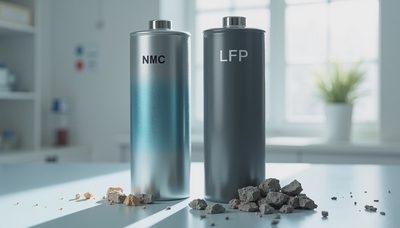
NMC — Nickel Manganese Cobalt:
The industry standard for most of the EV era. High energy density means more range from a smaller, lighter battery. Used by Tesla in most models, Hyundai, Kia, BMW, and most European manufacturers. The downsides: cobalt is expensive, supply chains are ethically problematic, and NMC batteries are more prone to thermal runaway — uncontrolled overheating that can lead to fire.
LFP — Lithium Iron Phosphate:
The chemistry BYD bet on. Lower energy density than NMC, meaning a heavier battery for the same range. But in exchange: no cobalt, significantly lower cost, and dramatically better thermal stability. An LFP battery is far less likely to catch fire even when punctured, crushed, or overcharged.
The trade-off is simple. NMC gives you more range per kilogram. LFP gives you more safety, lower cost, and longer cycle life per kilowatt-hour.
BYD looked at this equation and made a bet: with clever packaging, they could overcome LFP's energy density disadvantage while keeping all its advantages. The Blade Battery is the result.
Part 2: The Blade Design — Beyond Chemistry
Chemistry alone isn't enough. How you arrange the cells matters enormously.
Traditional EV battery packs use cylindrical cells — thousands of small round batteries, like oversized AA cells, wired together. Or pouch cells — flat, rectangular, flexible packages stacked in modules. Both approaches waste space. Cylindrical cells leave air gaps between each cell. Pouch and prismatic cells require bulky module housings, cooling channels, and structural supports.
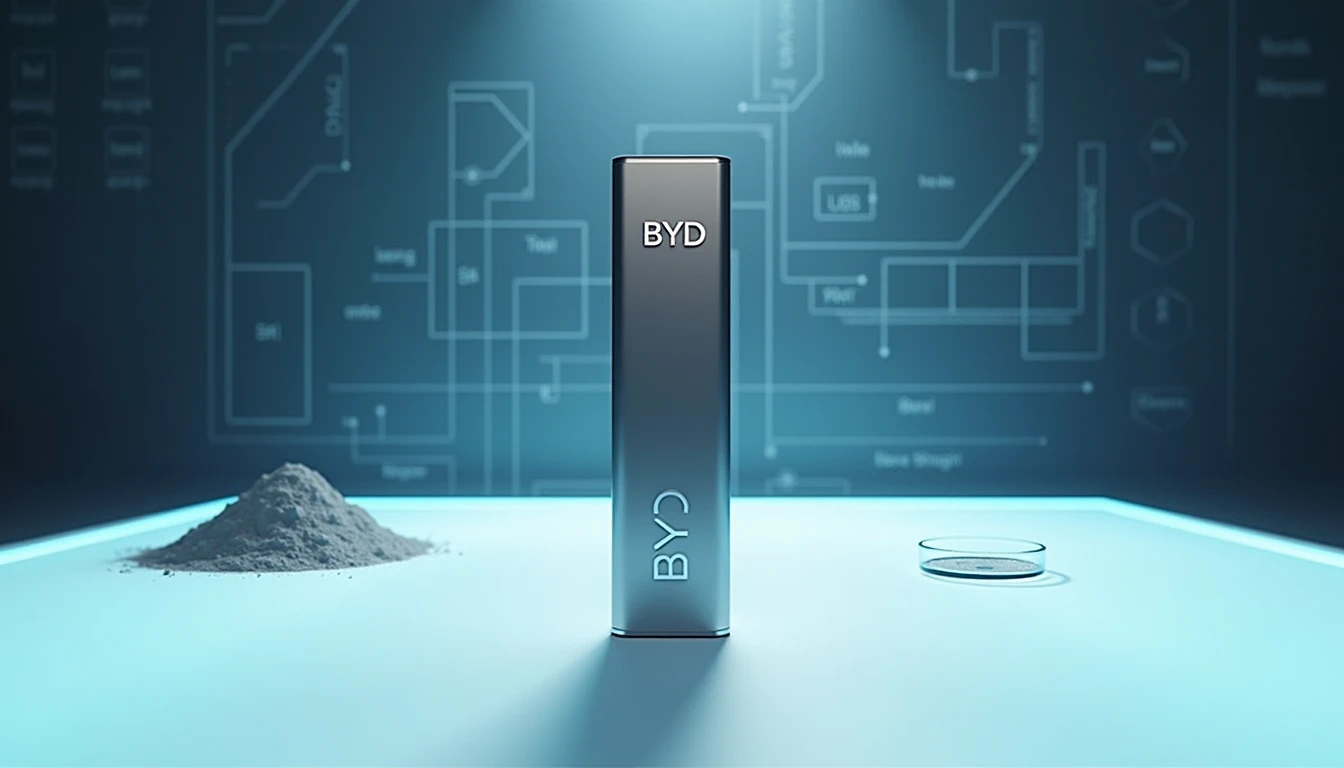
BYD's innovation is the blade cell itself: a long, thin, flat cell — roughly the shape of a blade, hence the name — that runs the entire width of the vehicle. These blade cells are arranged side by side in a single layer, directly integrated into the battery pack structure.
Why this matters:
No modules. In a traditional pack, cells are grouped into smaller modules, and modules are assembled into the pack. Each module adds weight, cost, and wasted volume. The Blade Battery eliminates modules entirely — cells go directly into the pack. BYD calls this Cell-to-Pack technology. Fewer parts. Less weight. More space for active battery material.
Structural integration. The blade cells are strong enough to serve as structural elements. The battery pack becomes part of the vehicle's chassis, contributing to rigidity and crash protection rather than being a fragile component that needs protecting.
Better cooling. The flat, thin shape gives each cell a large surface area relative to its volume. Heat dissipates more efficiently. This is critical for safety and charging performance.
The result: BYD claims the Blade Battery achieves 50% higher volumetric energy density than conventional LFP packs. That narrows the gap with NMC significantly while retaining LFP's safety and cost advantages.
Part 3: The Safety Question
In 2021, BYD published a video that sent ripples through the automotive industry. They subjected a Blade Battery cell to the most brutal EV battery test in common use: the nail penetration test.
A steel nail is driven through the centre of a fully charged battery cell. This creates an internal short circuit — the most dangerous failure mode for a lithium-ion battery. NMC cells typically react violently. Temperatures spike above 500°C. The cell can ignite.
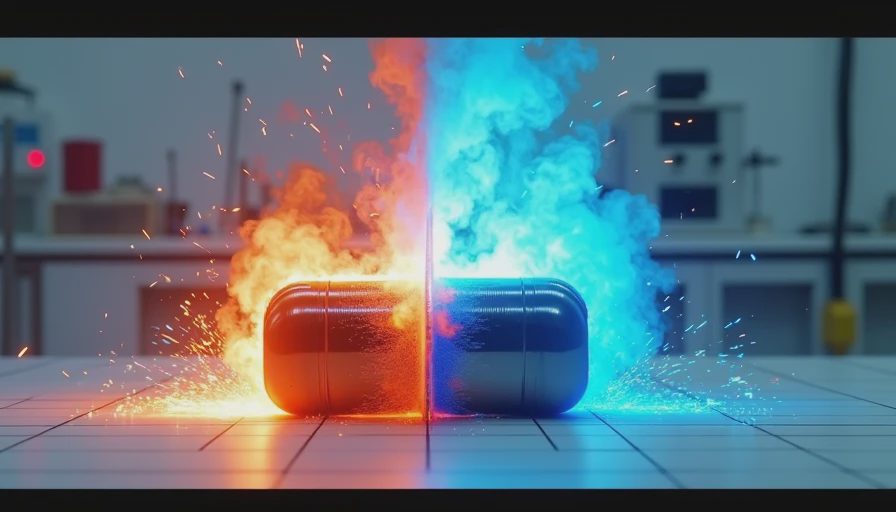
The Blade Battery cell did not catch fire. It did not smoke. Its surface temperature peaked at approximately 60°C — hot enough to be uncomfortable to touch, but far below the thermal runaway threshold.
Third-party testing has confirmed these results. A 2022 study published in the Journal of the Electrochemical Society subjected Blade Battery cells to nail penetration, overcharging, and crushing. In all tests, the cells remained stable. No fire. No explosion. No toxic gas release.
This is LFP chemistry at work. The iron phosphate cathode material is inherently stable. It does not release oxygen when heated — and without oxygen, fire cannot sustain itself. NMC cathodes, by contrast, release oxygen as they break down, providing fuel for thermal runaway.
What this means for owners: EV fires are already rare — far rarer than petrol car fires per vehicle on the road. But when they do occur, they're almost always linked to NMC batteries experiencing physical damage or charging faults. An LFP battery reduces that already small risk dramatically. For buyers nervous about EV safety, this is the most reassuring technology currently available.
Part 4: Longevity and Degradation
LFP batteries degrade more slowly than NMC. This is well-established in both laboratory testing and real-world fleet data.
A typical NMC battery might retain 70–80% of its original capacity after 2,000 charge cycles. An LFP battery can reach 3,000 to 5,000 cycles before hitting the same threshold. That's the difference between a battery that lasts 500,000 km and one that lasts well over a million.
BYD warranties the Blade Battery for 8 years or 200,000 km — matching or exceeding most competitors. But the real-world data suggests the battery will comfortably outlast the warranty.
Practical implication: You can charge an LFP-equipped EV to 100% regularly without the accelerated degradation that NMC batteries experience at full charge. BYD explicitly recommends charging to 100% at least once a week to keep the battery management system calibrated. This is a meaningful quality-of-life advantage — you don't need to think about charge limits for daily use the way many NMC EV owners do.
Part 5: The Trade-Offs
The Blade Battery is not perfect. No battery technology is.
Energy density remains lower than the best NMC cells. The Seal's 82.5 kWh Blade Battery weighs more than a Tesla Model 3's similarly-sized NMC pack. That weight penalty affects efficiency, though the Seal's competitive real-world range shows BYD has managed the trade-off well.
Cold-weather performance is a known LFP weakness. LFP batteries lose more range in freezing temperatures than NMC batteries. BYD has mitigated this with active thermal management, but the physics can't be entirely overcome. In our real-world testing, BYD's winter range drop is comparable to NMC-equipped competitors — roughly 20–30% in freezing conditions — but the battery takes longer to warm up and accept full charging speed when cold.
Charging speed is competitive but not class-leading. The 150 kW peak on the Seal's Blade Battery is adequate. Tesla and Hyundai's 800V NMC architectures charge significantly faster. BYD's next-generation Blade Battery, expected in 2027, promises higher charging speeds.
Why This Matters for Buyers
The Blade Battery shifts the EV value equation in ways that directly affect your ownership experience.
Lower cost. LFP's cheaper raw materials mean BYD can offer more battery capacity for less money. The Atto 3, Dolphin, and Seal all undercut NMC-equipped competitors on price while offering comparable or better range.
Better safety. If the idea of a lithium battery fire worries you — and it worries a lot of people — LFP is the most reassuring choice available. Independent testing consistently demonstrates its stability advantage.
Longer life. You're less likely to notice battery degradation over a typical ownership period. The battery will probably outlast the rest of the car.
Simpler daily use. Charge to 100% without worry. No need to micromanage charge limits for battery health. This is a genuinely useful advantage for owners who just want to plug in and drive.
The Blade Battery isn't just a component. It's BYD's competitive moat. While other manufacturers scramble to secure NMC supply chains and manage cobalt costs, BYD is vertically integrated — they make their own batteries, using abundant raw materials, with a design nobody else has matched at scale. That advantage flows through to every car they sell, and it's a significant reason why Chinese EVs are suddenly so competitive on the global stage.
You don't need to understand every detail of electrochemistry to appreciate what the Blade Battery means. It means your EV is safer, cheaper, and likely to last longer than the conventional wisdom suggests. And that's worth knowing.