Disclosure: This article is an educational explainer based on publicly available research, manufacturer specifications, and real-world testing. All chemical descriptions are simplified for accessibility. Battery data reflects current technology as of May 2026.
The Choice You Didn't Know You Were Making
When you buy an electric car, you're choosing more than a brand and a body style. You're choosing a battery chemistry — and that choice affects your daily life in ways that horsepower figures and WLTP ratings never will.
The two chemistries dominating today's EV market are LFP and NMC. You've probably seen these acronyms in reviews and spec sheets. Maybe you've nodded along and moved on. But the difference between them shapes how far you drive, how you charge, how safe you are, and how long your battery lasts.
Here's what actually matters. No periodic table required.
Part 1: What LFP and NMC Actually Mean
Every lithium-ion battery has three core components: a cathode, an anode, and an electrolyte. The cathode is the expensive bit that defines the battery's personality.
NMC stands for Nickel Manganese Cobalt. These three metals form the cathode material. NMC batteries have been the industry standard for most of the modern EV era. Tesla used NMC exclusively until 2021. Hyundai, Kia, BMW, Mercedes, and most European manufacturers still use NMC in most models.
LFP stands for Lithium Iron Phosphate. Iron and phosphate replace nickel, manganese, and cobalt in the cathode. BYD bet its entire business on LFP. Tesla now uses LFP in base Model 3 and Model Y variants. The technology was once dismissed as a budget compromise. It's now recognised as a legitimate — and in some ways superior — alternative.
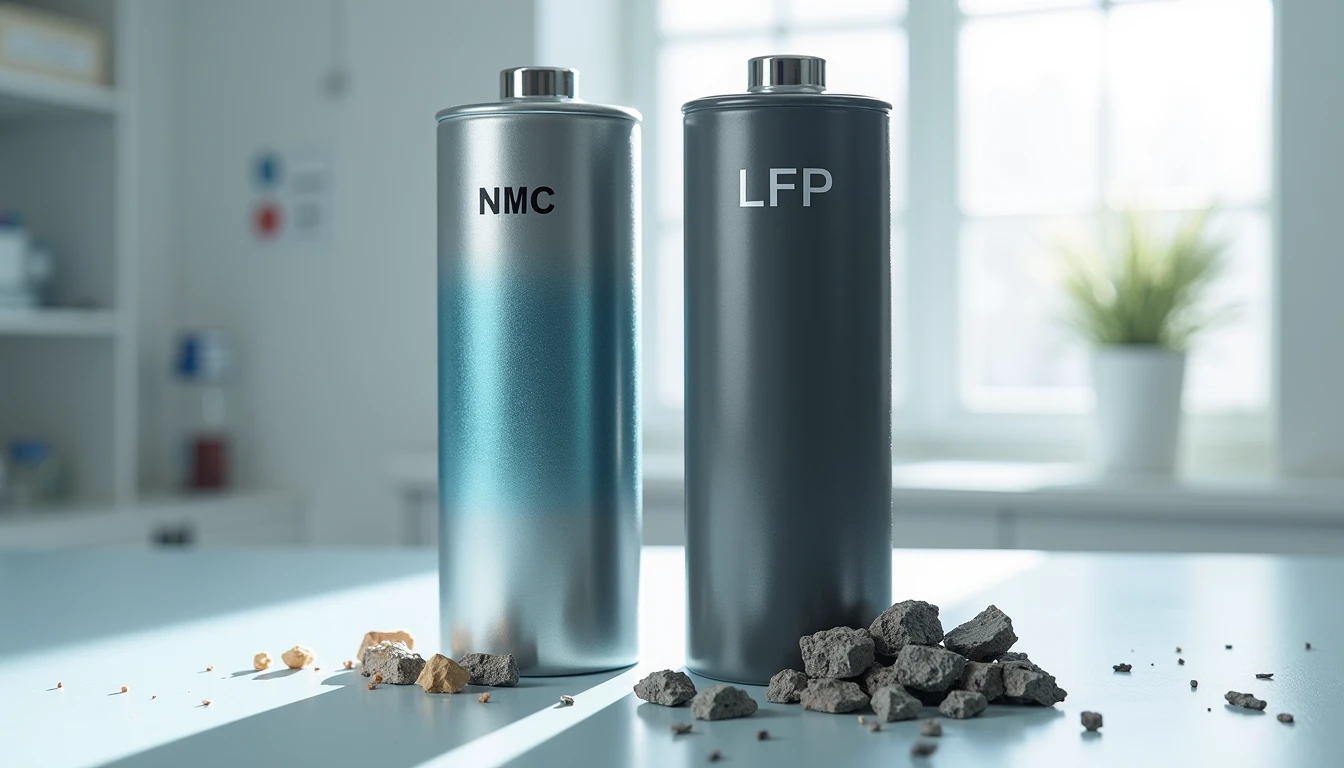
The fundamental trade-off: NMC stores more energy per kilogram. LFP is safer, cheaper, and lasts longer. Everything else flows from these differences.
Part 2: Energy Density — The Range Question
NMC's headline advantage is energy density. A typical NMC battery pack stores 200–260 watt-hours per kilogram. A typical LFP pack stores 140–180 watt-hours per kilogram.
That means an NMC battery delivers more range from a lighter, more compact pack. It's why the longest-range EVs on the market — the Mercedes EQS, the Lucid Air, the longest-range Tesla Model S — all use NMC chemistry.
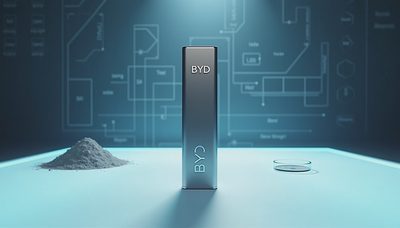
LFP requires a heavier, slightly larger battery to deliver the same range. But the gap is narrowing. BYD's Blade Battery packs achieve around 50% higher volumetric energy density than conventional LFP designs through clever cell-to-pack engineering. The Seal's 82.5 kWh Blade Battery delivers real-world range within 10–15% of similarly-sized NMC competitors.
What this means for you: If absolute maximum range is your priority — if you regularly drive 500 km days and want to minimise charging stops — NMC still holds an edge. For everyone else, LFP's range is competitive and the difference shrinks with each new generation.
Part 3: Safety — The Question That Keeps Engineers Awake
This is where LFP pulls decisively ahead.
Lithium-ion batteries can experience thermal runaway — a self-sustaining chain reaction where the battery overheats uncontrollably. It's rare. But when it happens, the results can be catastrophic.
NMC cathodes release oxygen as they break down under extreme heat. Oxygen fuels fire. An NMC battery in thermal runaway essentially carries its own oxidiser, making the reaction extremely difficult to stop once it starts.
LFP cathodes do not release oxygen when heated. The iron phosphate chemical bond is extraordinarily stable. Without oxygen release, thermal runaway is far less likely to initiate, and if it does, the reaction is far less violent.
The industry-standard nail penetration test illustrates the difference starkly. Drive a steel nail through a fully charged NMC cell, and it typically ignites — temperatures spike above 500°C, smoke pours out, and the cell can catch fire. Drive the same nail through an LFP cell, and it might get warm. BYD's Blade Battery cells peak at around 60°C in this test. No fire. No smoke. No drama.
What this means for you: EV fires are statistically far rarer than petrol car fires per vehicle on the road. But if the idea of a battery fire worries you — and it worries many buyers — LFP is the safer choice by a significant margin. It's not that NMC is dangerous. It's that LFP is exceptionally stable.
Part 4: Longevity — How Long Will Your Battery Last
LFP batteries degrade more slowly than NMC. This is well-established in both laboratory cycling tests and real-world fleet data.
A typical NMC battery might reach 70–80% of its original capacity after 2,000 full charge-discharge cycles. In real-world terms, that's roughly 500,000–800,000 km before the battery drops to 80% capacity.
An LFP battery can reach 3,000 to 5,000 cycles before reaching the same point. That's 800,000 to over 1.5 million kilometres.
For most owners, both chemistries will outlast their ownership period. The average UK car covers about 12,000 km per year. At that rate, even an NMC battery would take 40 years to degrade to 80%. The car will rust away before the battery fails.
But the longevity advantage matters in two ways. First, it supports resale value — a used LFP EV should hold its capacity better than an equivalent NMC vehicle at the same age and mileage. Second, it changes how you can treat the battery day to day.
Part 5: The 100% Charging Difference
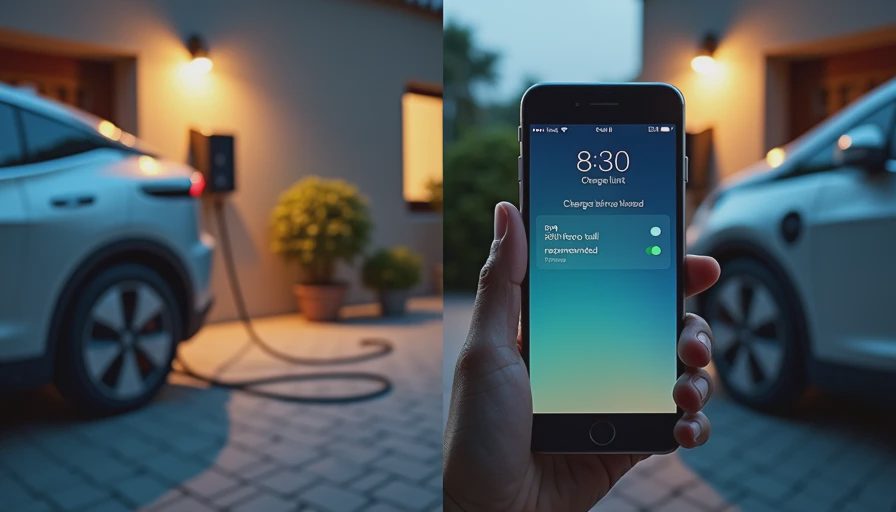
This is the most practical daily-life difference between LFP and NMC. And it's the one most EV reviewers forget to mention.
NMC batteries degrade faster when held at very high or very low states of charge. The industry recommendation is to charge to 80% for daily use and reserve 100% for long trips. Charging to 100% every night will accelerate degradation noticeably.
LFP batteries do not have this sensitivity. The chemistry is stable at full charge. In fact, BYD recommends charging LFP vehicles to 100% at least once a week to keep the battery management system properly calibrated. Tesla issues the same guidance for its LFP-equipped models.
What this means for you: If you own an LFP EV, you plug in at night and wake up to a full battery every morning. No mental arithmetic. No adjusting charge limits for daily use. No anxiety about accidentally charging to 100% too often. It's a genuinely useful quality-of-life advantage that removes a layer of battery micromanagement from EV ownership.
If you own an NMC EV, you should think about charge limits. Many owners don't bother, and their batteries will still last longer than they keep the car. But if you want to maximise battery longevity, you'll be setting charge limits regularly.
This difference alone is enough to make LFP the better choice for many non-enthusiast buyers. It simplifies EV ownership in a way that matters every day.
Part 6: Cost — Why LFP Is Winning
Cobalt is expensive. It currently trades at around £25 per kilogram on global commodities markets. It's also ethically problematic — a significant portion of global cobalt supply comes from the Democratic Republic of Congo, where mining conditions have been widely criticised.
LFP uses no cobalt. Iron and phosphate are abundant, cheap, and ethically uncomplicated. This gives LFP a structural cost advantage that widens as production scales.
BYD's vertical integration amplifies this advantage. The company mines its own lithium, manufactures its own cells, and builds its own battery packs. No Western automaker matches this level of battery supply chain control. The result is visible in showroom prices — BYD undercuts NMC-equipped competitors by thousands while offering comparable or better equipment.
What this means for you: LFP-equipped EVs are cheaper to buy with no meaningful compromise in daily usability. As LFP production scales globally, the cost advantage will flow through to more vehicles from more manufacturers.
Part 7: Cold Weather Performance
LFP's one genuine weakness is cold-weather performance. LFP batteries experience greater range loss in freezing temperatures than NMC. The chemistry is inherently more sluggish when cold, and the battery requires more energy to heat itself to optimal operating temperature.
In real-world testing, LFP-equipped EVs typically lose 20–30% of their range in freezing conditions. NMC-equipped EVs lose 15–25%. The difference is noticeable but not dramatic. Modern thermal management systems have narrowed the gap significantly from early LFP implementations.
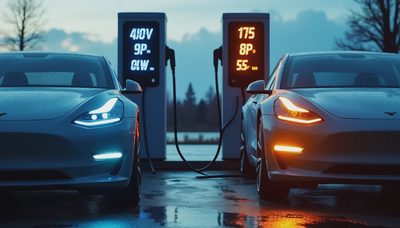
The more practical cold-weather issue is charging speed. An LFP battery that's been sitting in sub-zero temperatures will accept charge slowly until it warms up. Preconditioning — warming the battery before arriving at a charger — mitigates this, but not all vehicles offer it, and it requires planning.
What this means for you: If you live in a cold climate with regular sub-zero winter temperatures, NMC holds a modest advantage. If you live in a temperate climate — most of the UK, Western Europe, and coastal Australia — the difference is negligible for daily driving.
Part 8: Which Chinese EVs Use Which Chemistry
Brand | Chemistry | Key Models |
|---|---|---|
BYD | LFP (Blade Battery) | Atto 3, Dolphin, Seal, Sealion 6 |
MG | LFP (most models) | MG4, MG5, ZS EV |
NIO | NMC (with LFP options) | EL6, ET5, ET7 |
XPeng | NMC (with LFP options) | G6, G9, P7 |
BYD and MG have committed to LFP across their mainstream lineups. NIO and XPeng use NMC in their premium models, with LFP options in some base variants. The Chinese industry is shifting toward LFP faster than the Western industry — China's domestic EV market is already majority LFP by volume.
Which Should You Choose
Choose LFP if: You want the safest battery available. You want to charge to 100% without thinking about it. You want the lowest purchase price. You plan to keep the car long-term. You live in a temperate climate. You're buying a BYD or MG — because you don't have a choice, and that's fine.
Choose NMC if: You want the absolute maximum range available. You regularly drive in very cold conditions. You're buying a premium EV where NMC remains the only option. You're comfortable managing charge limits for daily use.
The honest truth: For the vast majority of buyers, the battery chemistry in their EV matters far less than the car around it. Both LFP and NMC are mature, reliable technologies that will serve you well. The differences are real — safety, longevity, charging habits — but they're smaller in daily life than internet arguments suggest.
LFP is winning the long game. It's cheaper, safer, and more abundant. It's the chemistry that will power the mass adoption of electric vehicles. If you're buying a Chinese EV today, you're probably buying LFP. And that's a good thing.