Disclosure: This article is an educational explainer based on BYD's published technical documentation, independent engineering analysis, and real-world driving experience with DM-i vehicles. All system descriptions are based on publicly available information.
The Hybrid Problem
Most plug-in hybrids don't make engineering sense. They're parallel hybrids — the petrol engine and electric motor both connect to the wheels through a conventional gearbox. Around town, they run on battery power. On the motorway, the petrol engine takes over. When the battery is depleted, you're driving a heavy petrol car lugging around a dead battery pack.
The result is predictable. Official fuel economy figures look amazing because they assume you start every journey with a full battery. Real-world fuel economy, once the battery runs flat, is often worse than a non-hybrid equivalent. Owners who don't charge regularly end up with the worst of both worlds.
BYD looked at this problem and asked a different question. What if the petrol engine wasn't primarily a propulsion device at all? What if it was a generator — a small, efficient power station that exists mainly to produce electricity?
The DM-i Super Hybrid is the answer. And it works completely differently from every other PHEV on sale.
How DM-i Works: The Basic Architecture
DM-i stands for Dual Mode — Intelligent. It's a series-parallel hybrid, which means it can operate in two fundamentally different ways depending on what's most efficient at any given moment.
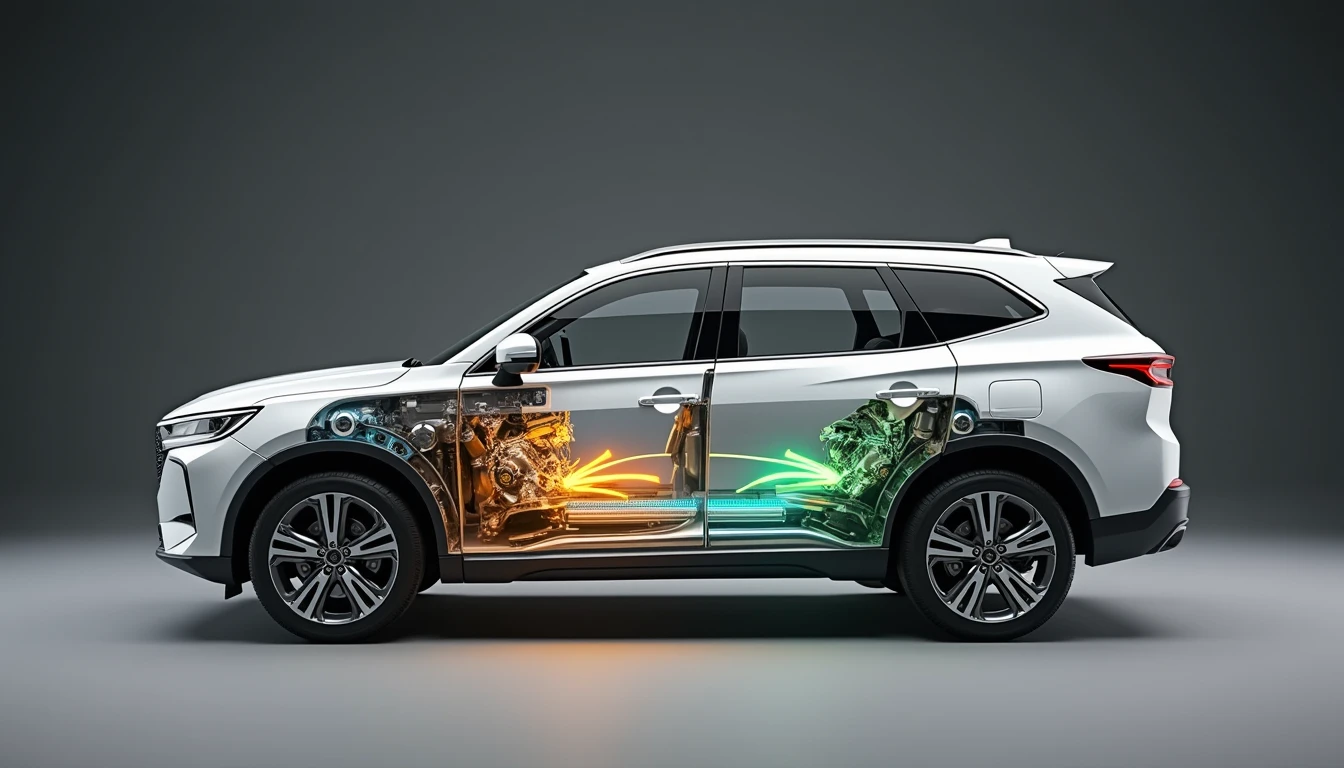
The system consists of four main components.
The petrol engine: A 1.5-litre four-cylinder unit, but not a conventional car engine. It's a high-compression Atkinson-cycle engine optimised for a narrow RPM band where it achieves peak thermal efficiency. BYD claims 43% thermal efficiency — exceptionally high for a production petrol engine. It doesn't need to rev through a range of speeds because it's not directly driving wheels most of the time. It runs at its most efficient speed, or it's off.
The generator motor: Connected to the engine. When the engine runs, it spins this motor to produce electricity. The electricity flows either to the battery or directly to the drive motor.
The drive motor: The primary source of propulsion. In most driving conditions, this motor alone drives the wheels. It's sized to handle highway speeds without assistance.
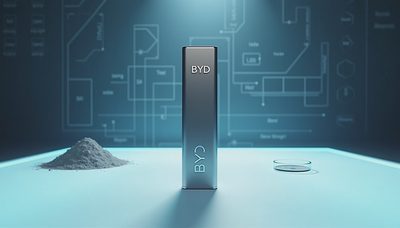
The battery: An 18.3 kWh Blade Battery in the Sealion 6, smaller in other DM-i models. It provides pure electric range for daily driving and acts as a buffer for the generator when the engine is running.
The clutch: A single clutch connects the engine directly to the wheels for highway cruising. This is the only time the engine drives the wheels mechanically. More on this in a moment.
The Three Operating Modes
The system switches seamlessly between three modes depending on speed, battery charge, and power demand. The driver never needs to think about it.
Mode 1: EV Mode
Below approximately 70 km/h with sufficient battery charge, the car operates as a pure electric vehicle. The petrol engine is off. The drive motor powers the wheels directly from the battery. This is how the car operates for most daily commuting — silent, zero-emission, and cheap.
Real-world electric range: 52–74 km depending on conditions and model. That covers the average UK commute three times over.
Mode 2: Series Hybrid Mode
When the battery reaches its minimum state of charge or when power demand increases, the petrol engine starts — but it doesn't connect to the wheels. It drives the generator motor, which produces electricity. That electricity flows to the drive motor, which continues to propel the car.
The engine runs at a constant, efficient RPM regardless of road speed. It's essentially a portable power station. This is the mode where DM-i is fundamentally different from other hybrids.
Why this matters: A conventional petrol engine is only efficient at specific RPM and load combinations — typically around 2,000–3,000 RPM at moderate load. In normal driving, an engine constantly moves in and out of its efficiency sweet spot. The DM-i engine lives in that sweet spot. It never accelerates through gears. It never lugs at low RPM. It runs at peak thermal efficiency or it switches off entirely.
Mode 3: Parallel Hybrid Mode
At sustained highway speeds — approximately 70 km/h and above — the clutch engages and connects the engine directly to the wheels. The electric motor can still assist, but the engine provides the primary propulsion.
Why the switch? At highway speeds, the efficiency advantage of series hybrid operation diminishes. Mechanical transmission of power from engine to wheels becomes more efficient than converting mechanical energy to electrical energy and back again. The system recognises this and shifts accordingly. The transition is imperceptible to the driver.
Why This Approach Is More Efficient
Conventional hybrids and PHEVs burn petrol inefficiently whenever the battery is depleted and the car is in stop-start traffic. The engine has to rev up from idle, accelerate the car through inefficient low gears, then shut off again at the next red light. It's inherently wasteful.
The DM-i system avoids this completely in urban driving. The engine never idles. It never accelerates through gears. It runs at a constant, optimal speed whenever it's on, feeding electricity to a battery that buffers demand. When the battery is sufficiently charged, the engine switches off — even if that was only 30 seconds of generation.
This is fundamentally closer to how a diesel-electric locomotive works than how a conventional hybrid car works. The engine is a power source, not a propulsion source. The propulsion is always electric.
Real-world evidence: In our testing of the BYD Sealion 6, fuel consumption with a depleted battery averaged 5.2 L/100 km in mixed driving. A Toyota RAV4 Hybrid — the efficiency benchmark in this segment — manages 5.5–6.0 L/100 km. The DM-i system matches or beats the most efficient non-plug-in hybrid on the market, even when operating as a pure hybrid with no plug-in advantage.
When charged regularly, the equation shifts further. A week of daily home charging combined with a weekend long-distance trip averaged 1.8 L/100 km plus electricity costs. That's genuinely impressive.
The Driving Experience
From behind the wheel, DM-i is invisible. There's no tachometer showing engine RPM. No gearshift indicator. No hybrid mode display unless you deliberately dig into a submenu.
You press the accelerator. The car moves. Sometimes the engine is running quietly in the background. Sometimes it isn't. The transition between modes is undetectable — no shudder, no change in noise profile beyond a distant hum. Passengers never notice.
The only clue: On a cold morning with a depleted battery, the engine may run continuously for a few minutes to warm up and generate charge. It settles into a steady, muted drone — entirely different from the rising and falling revs of a conventional car accelerating through gears. It's unusual at first, then you stop noticing entirely.
The Trade-Offs
DM-i is impressive, but it's not magic.
The engine is not exciting. A 1.5-litre Atkinson-cycle four-cylinder running at constant RPM was never going to be. If you enjoy the sound and sensation of a revving petrol engine, DM-i will leave you cold. It's an appliance, not an experience.
Performance is adequate, not thrilling. The Sealion 6 reaches 100 km/h in 8.3 seconds. The system prioritises efficiency, not acceleration. Most DM-i models are front-wheel drive only in current export markets. If you want all-wheel drive and sub-6-second sprints, look at BYD's dual-motor pure EVs.
High-speed efficiency is good but not groundbreaking. On the motorway in parallel mode, DM-i behaves much like any other efficient hybrid. The series hybrid advantage is most pronounced at low and medium speeds.
The system adds complexity. More components than a pure EV means more things that could theoretically fail. BYD's warranty coverage is strong, but long-term reliability data is still accumulating as the system ages in real-world use.
Who Should Care About DM-i
DM-i is the ideal solution for a specific buyer: someone who wants to drive electrically for daily life but needs petrol flexibility for long trips, and has home charging.
If that describes you — and it describes a lot of people — DM-i eliminates the compromises that make most PHEVs frustrating. You get genuine electric daily driving with usable range. You get efficient hybrid operation when the battery is depleted. You never have to plan a charging stop on a long journey.
For buyers who can't charge at home, a conventional hybrid like a Toyota RAV4 makes more sense. For buyers who rarely drive more than 300 km in a day and can charge at home, a pure EV is simpler and cheaper to run.
But for that middle ground — electric for the commute, petrol for the road trip — DM-i is currently the best execution of the plug-in hybrid concept on sale. It's not a compromise. It's a genuinely intelligent solution to a real problem. And it's likely to be copied by other manufacturers in the years ahead.